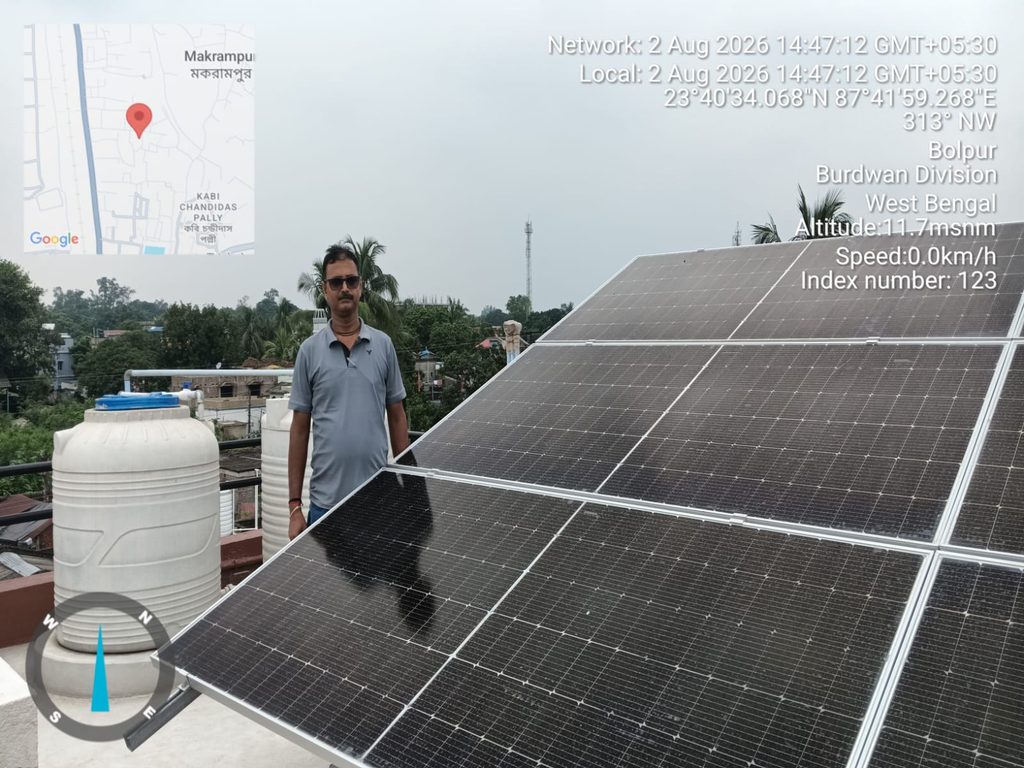
Project: 5kw ongrid DCR
Location: Birbhum
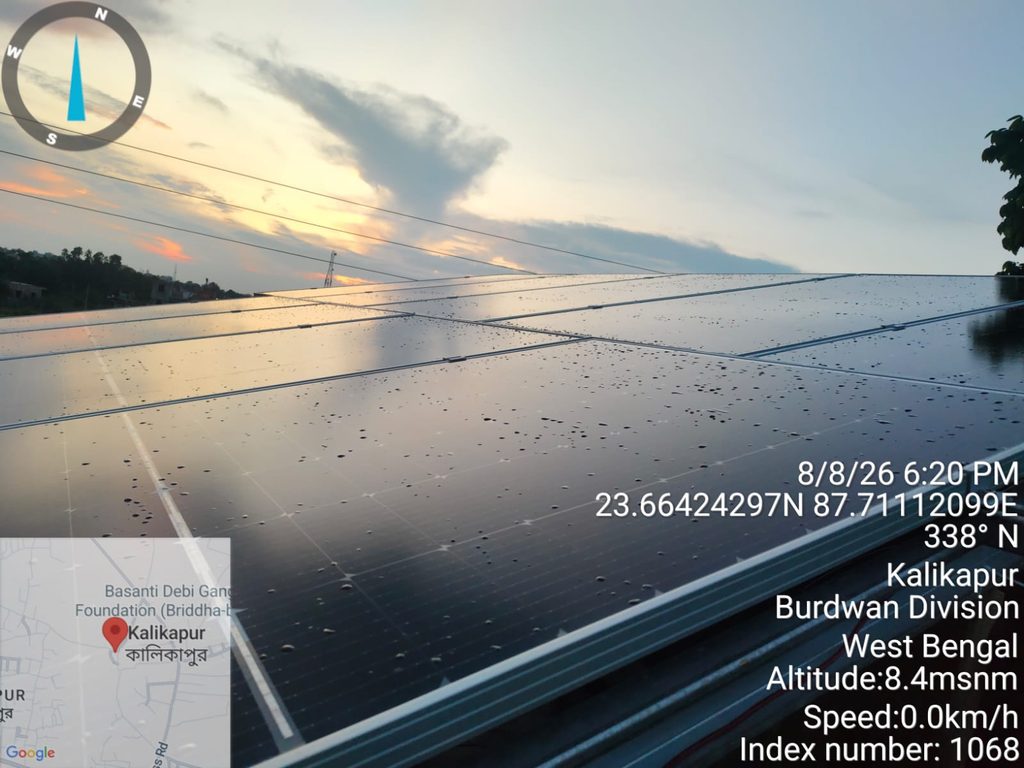
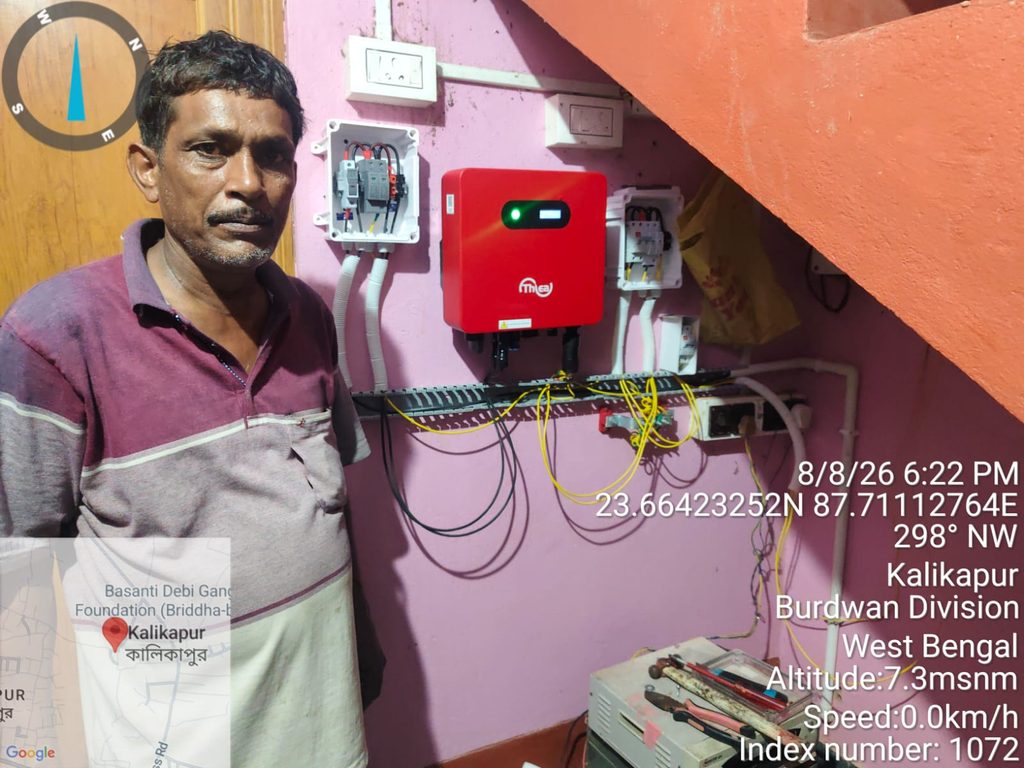
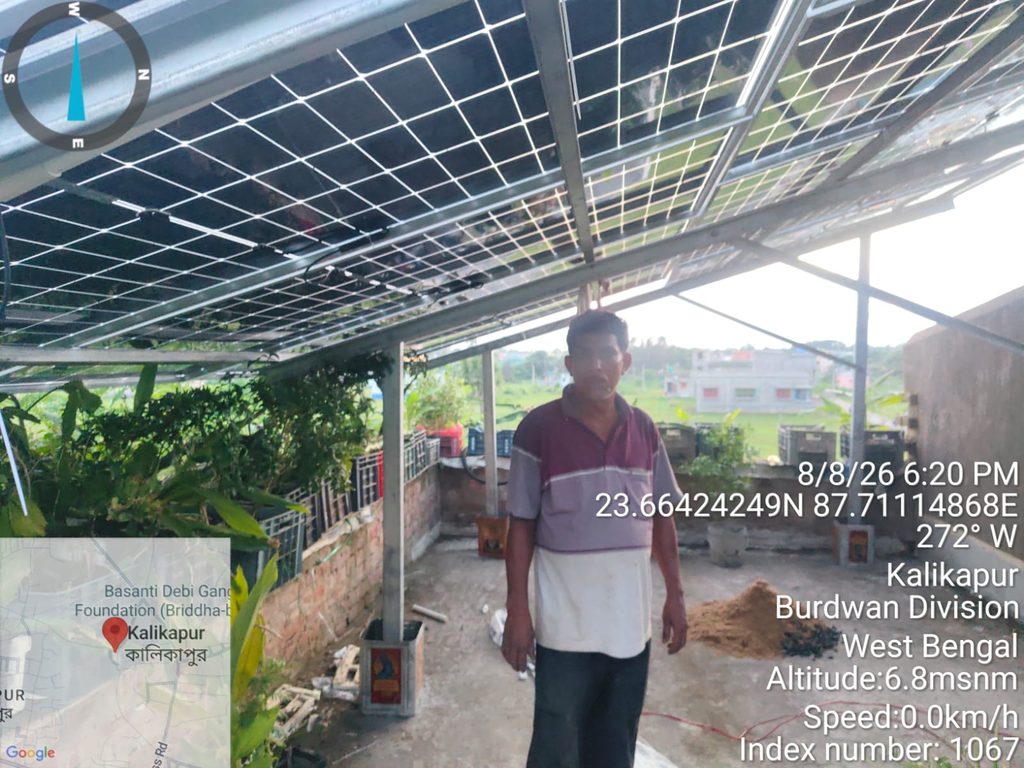

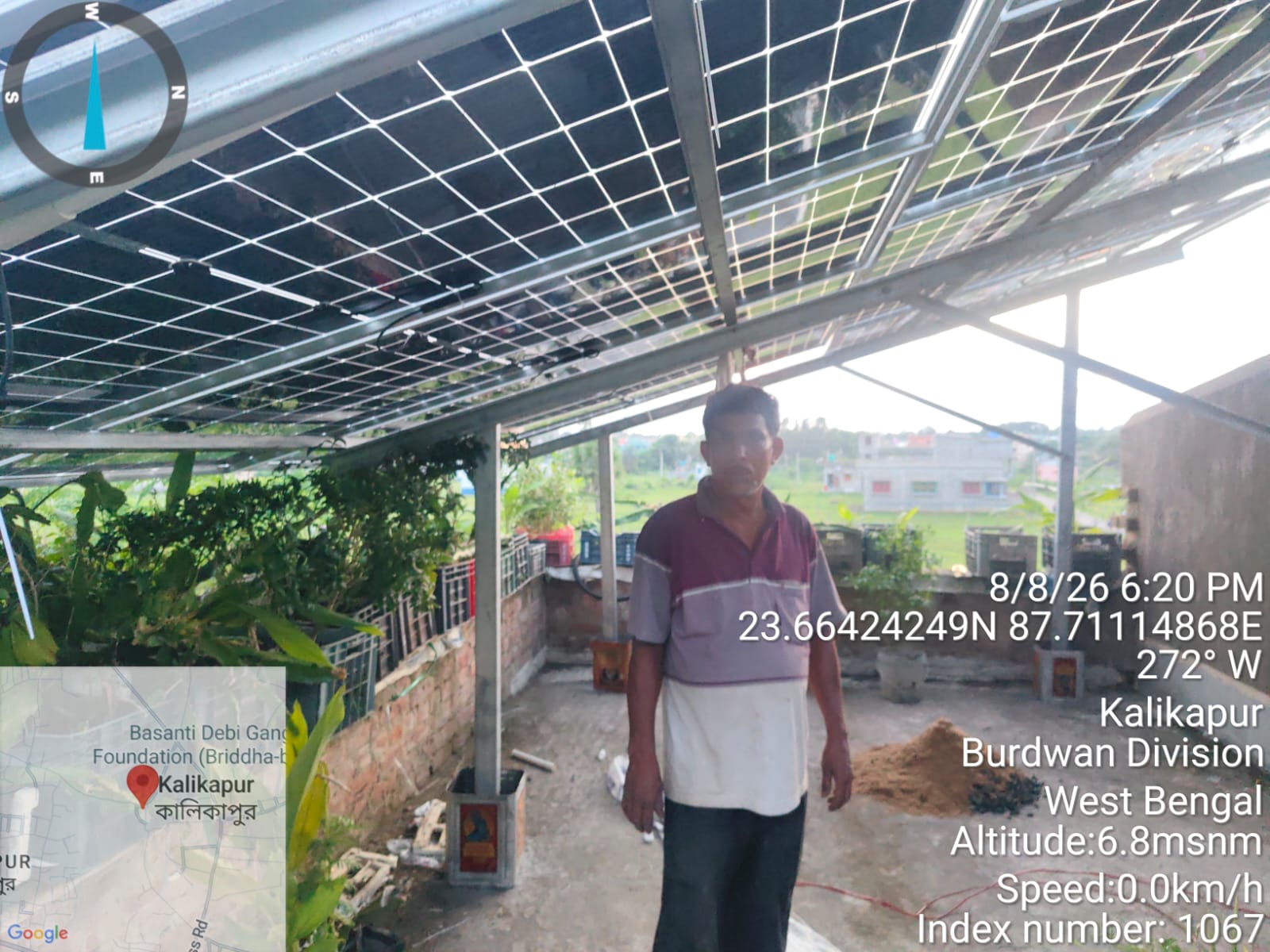
Project: 5kw ongrid DCR
Location: Birbhum
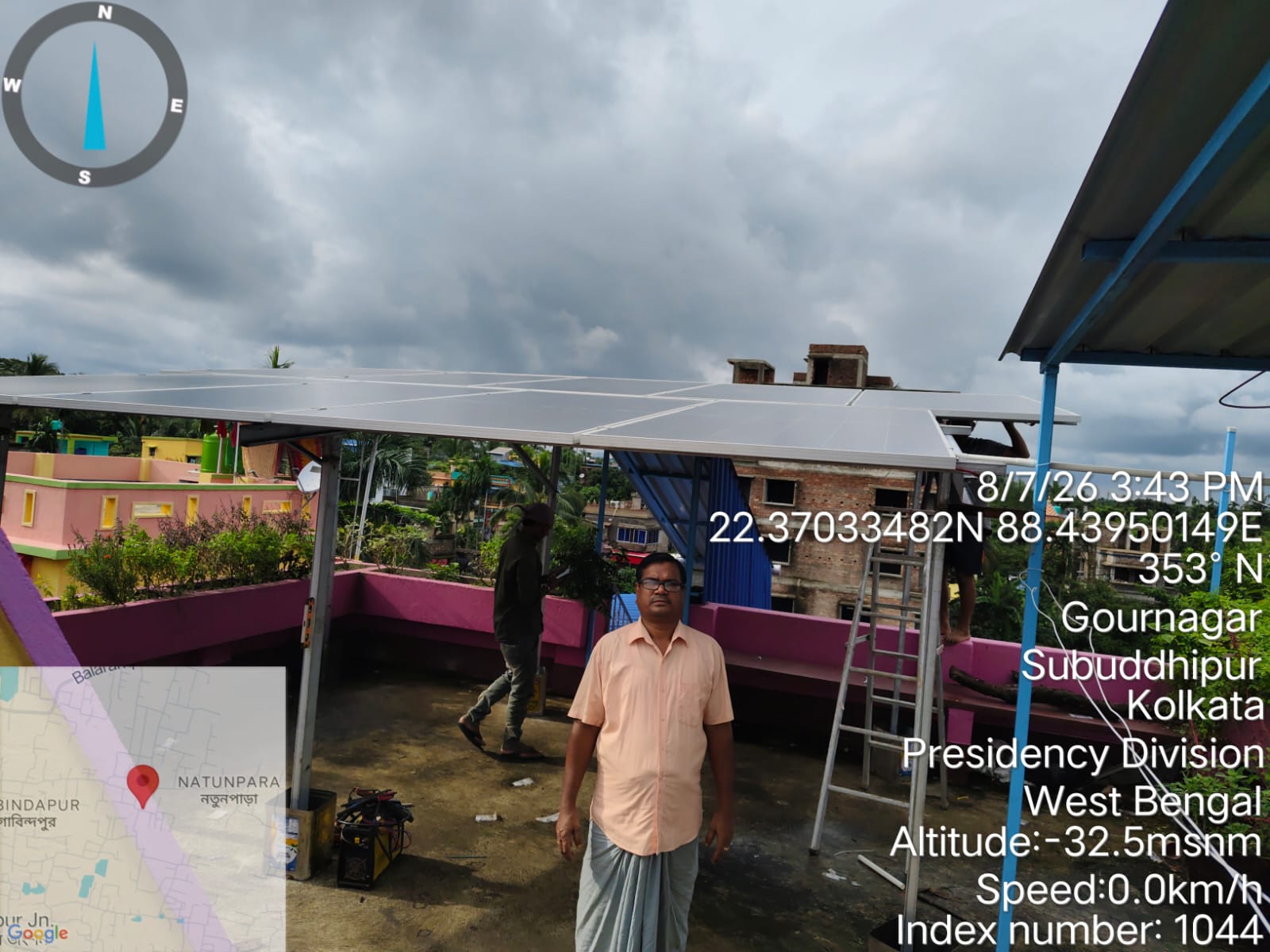
Name: Sunanda Halder
Location: Baruipur
Project: 5kw ongrid DCR
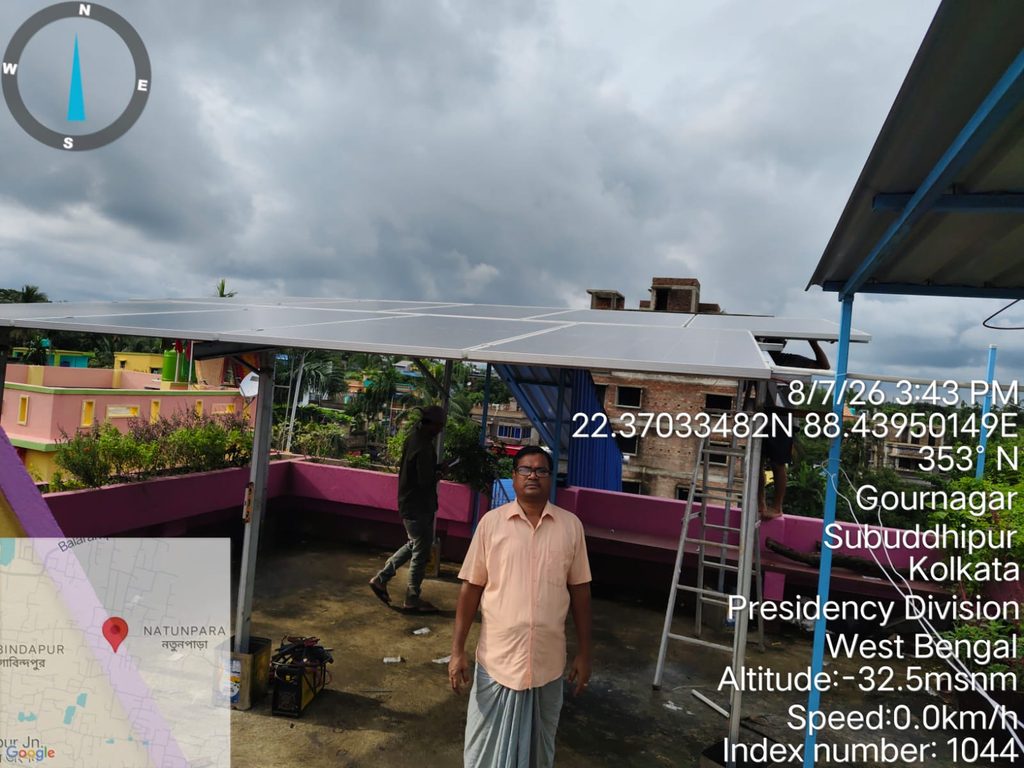
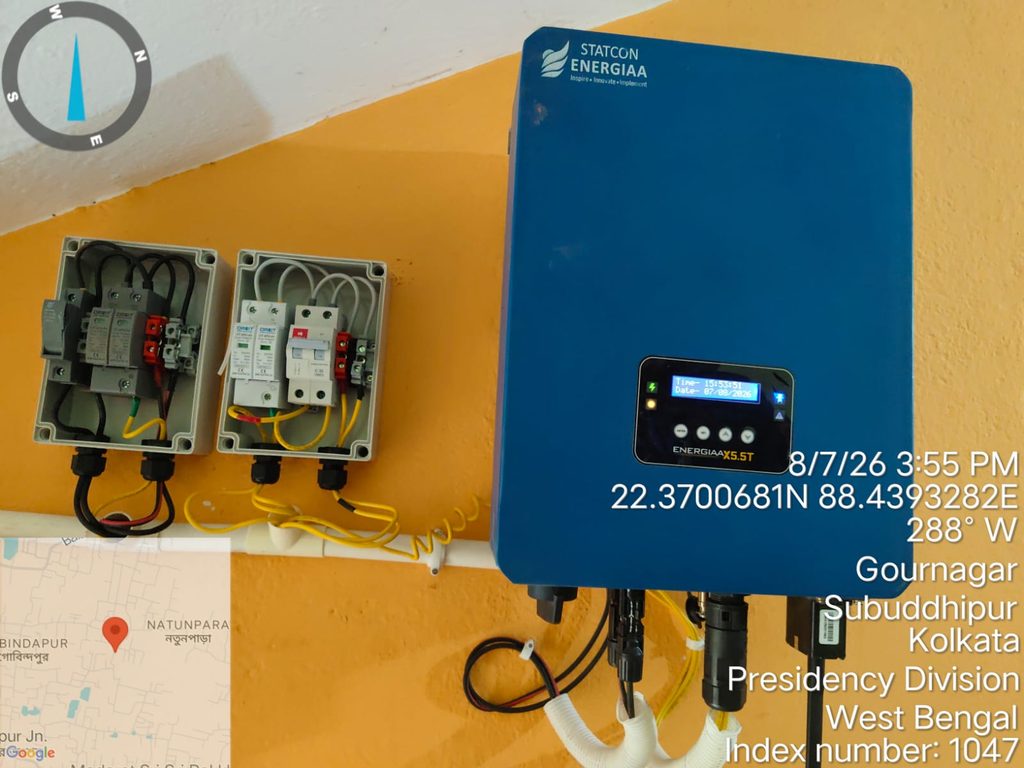
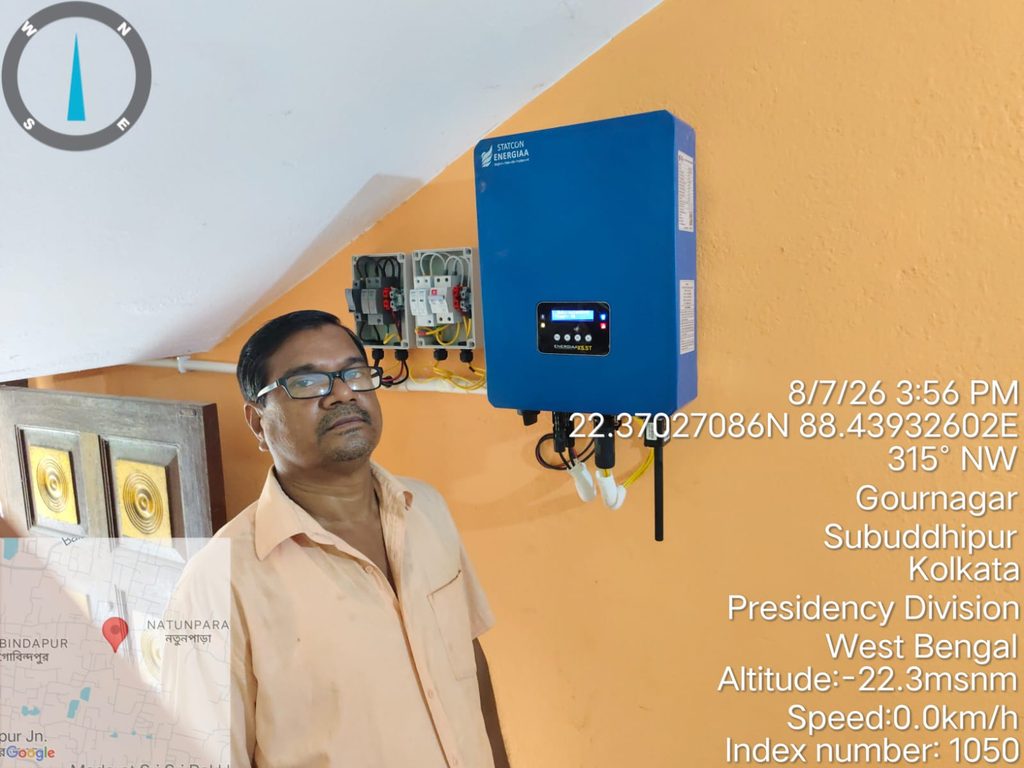
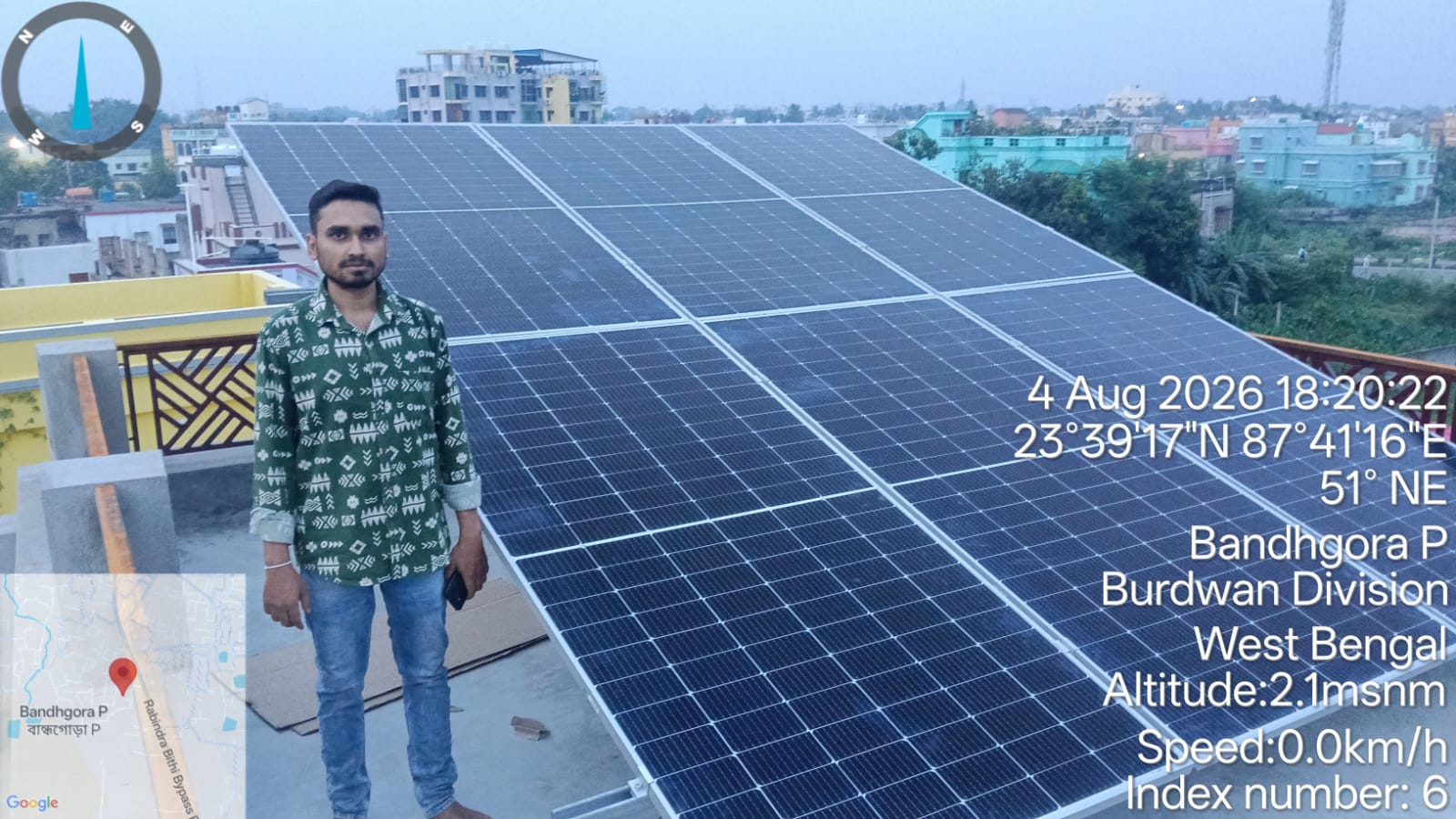
Name: Himan Mondal
Project: 3.3 kw ongrid DCR
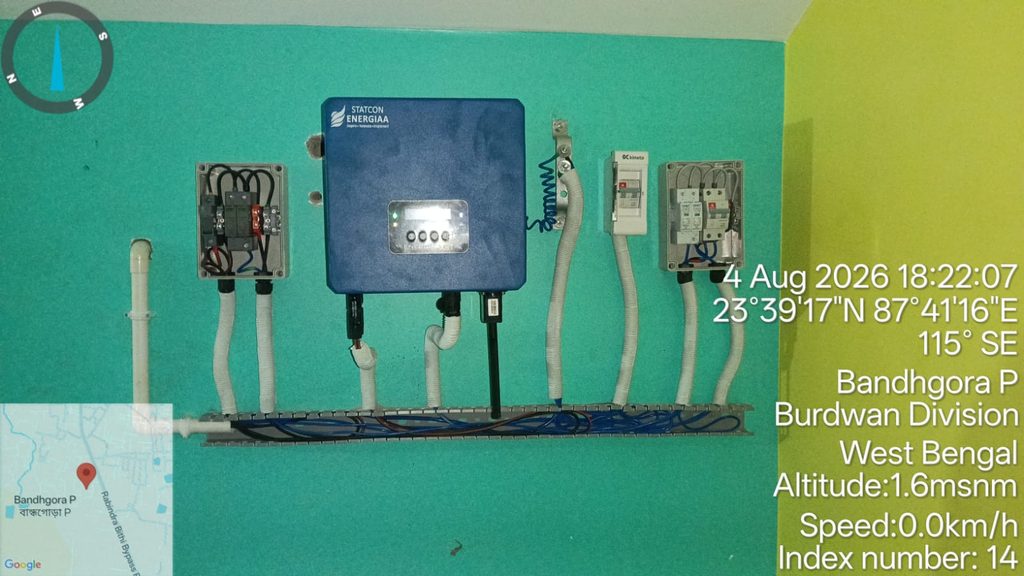
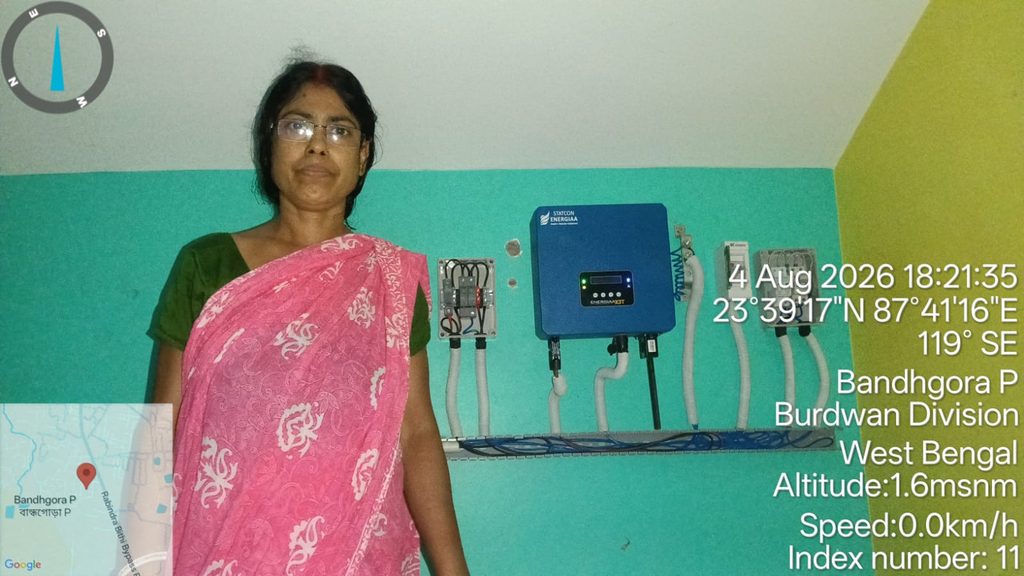
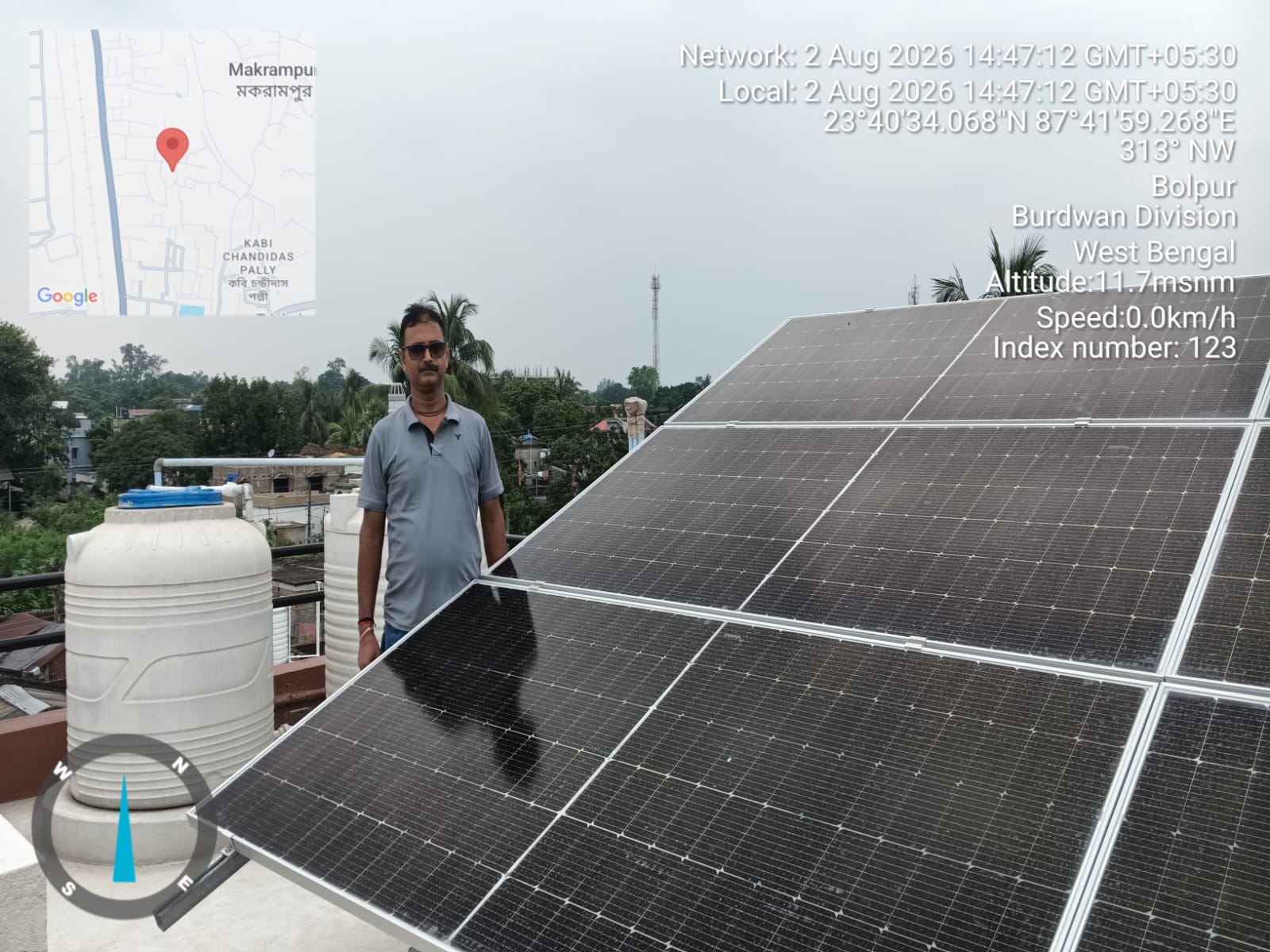
Client name: Ramkrishna Das Bairagya
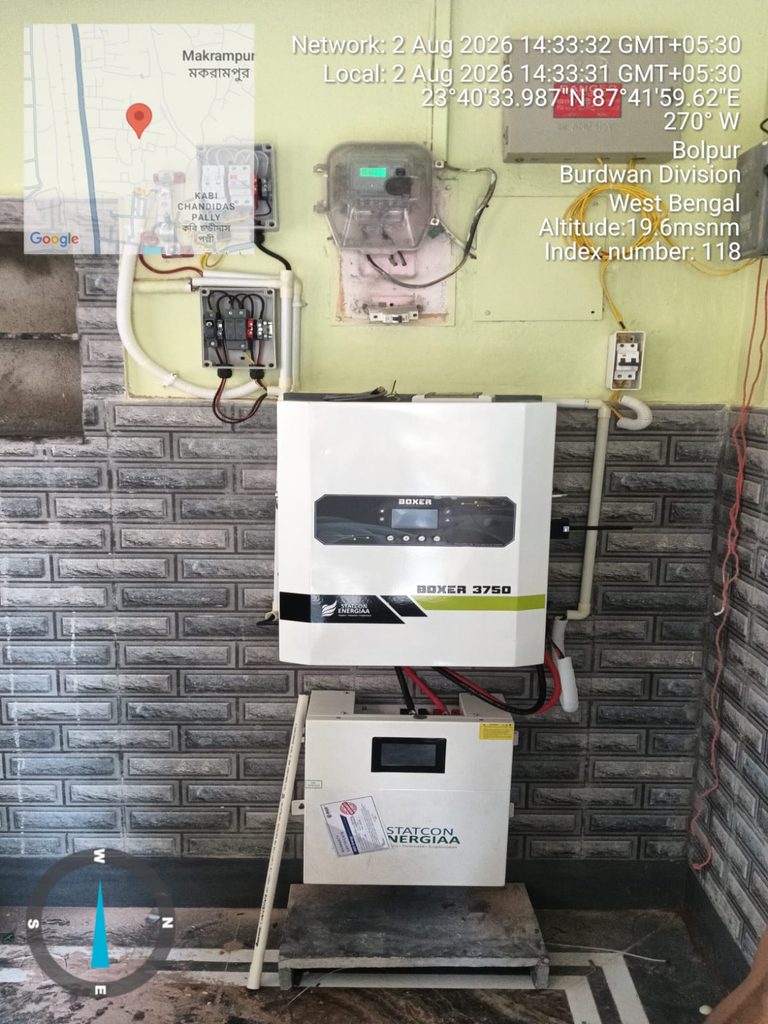
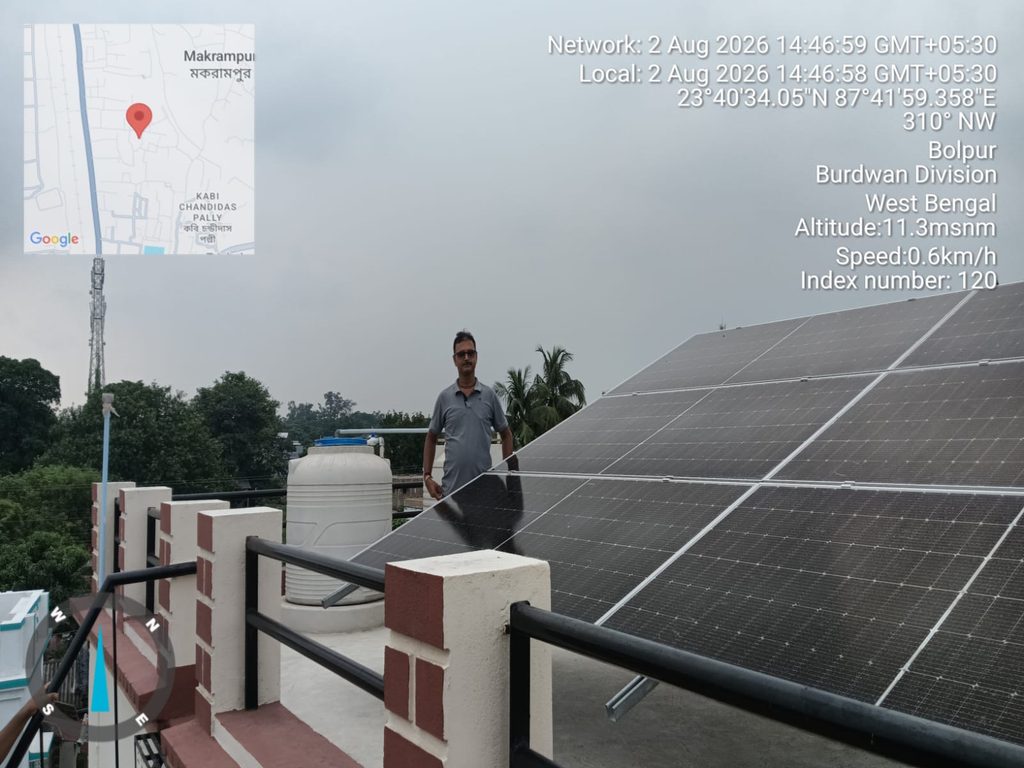
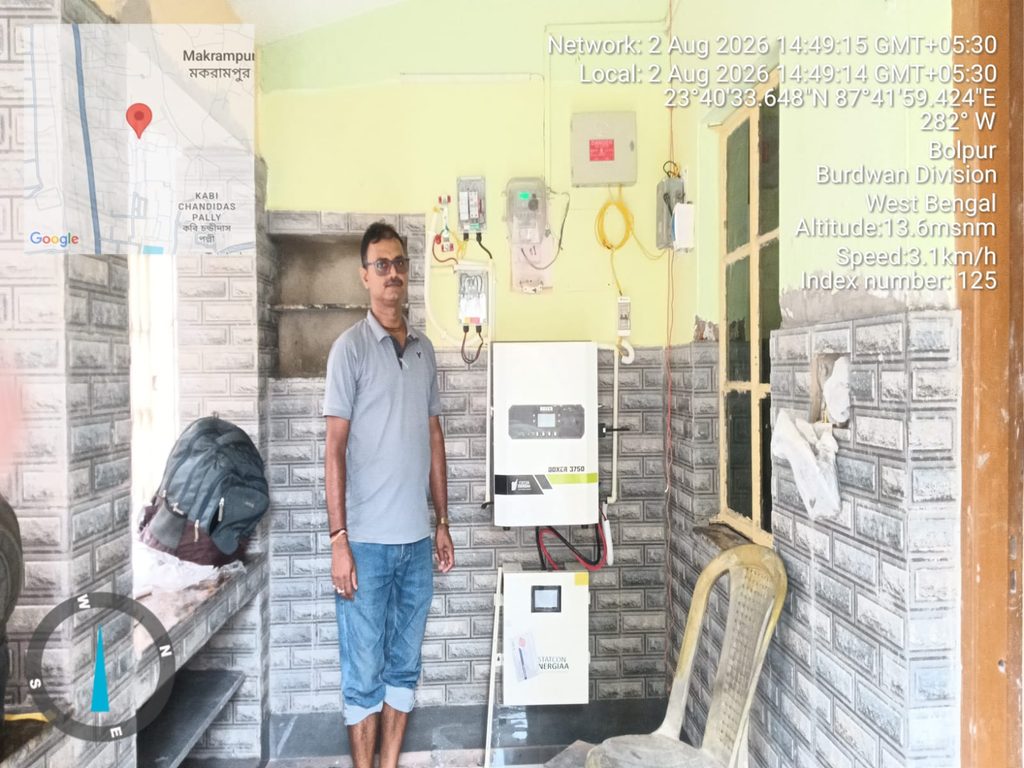
Project: 3.3kw Hybrid
Location: Bolpur

Rising electricity bills. Frequent power cuts.
If any of that sounds familiar, you are not alone. Households and businesses across Kolkata are rethinking how they power their lives, and green energy is leading that shift.
Green energy isn’t just an environmental buzzword anymore. Best solar panel installer in Kolkata has proven that it’s a practical, cost-saving, future-proofing decision.
Here’s why sustainability and operational efficiency now go hand-in-hand.
Green energy comes from renewable, naturally replenishing sources- sunlight, wind, and water- instead of fossil fuels. Solar power has become the most accessible form of green energy for Indian homes and businesses, thanks to falling equipment costs, generous subsidies, and Kolkata’s abundant sunshine for most of the year.
The shift matters because energy costs and carbon regulations are only moving in one direction: up and stricter. Businesses that adapt early gain a real competitive edge.
Solar panels convert sunlight into electricity, cutting dependence on the grid. For homeowners, this means smaller monthly bills.
For businesses, offices, factories, retail stores, clinics, it means:
Over a 20-25year panel lifespan, the savings compound dramatically compared to staying on conventional grid power alone.
Kolkata sees its share of grid instability and load-shedding, especially during peak summer months. Solar systems particularly when paired with battery storage, give businesses:
For clinics, manufacturing units, hospitality businesses, and IT offices, uninterrupted power isn’t a convenience; it’s operational continuity.
Consumers and clients increasingly favour businesses that visibly reduce their environmental footprint.
Going solar allows you to:
Central and West Bengal state schemes currently support solar adoption through:
These incentives significantly shorten the time it takes for a solar investment to pay for itself.
The benefits of green energy only materialize with a quality installation. A poorly designed or poorly maintained solar system underperforms, undermining both savings and sustainability goals. When evaluating solar installers in Kolkata, look for:
The right installer doesn’t just sell you panels- they design a system sized correctly for your actual consumption, guide you through subsidy paperwork, and stand behind their installation for years to come.
Green energy delivers a rare combination: lower costs, greater operational reliability, and a stronger sustainability profile- all from a single investment. As Kolkata’s businesses and homeowners increasingly make the switch, the difference between a good outcome and a great one almost always comes down to installer quality.
If you are evaluating your options, take the time to compare installers on experience, transparency, and after-service support- not price alone. A well-installed solar system pays dividends for decades; a rushed one costs you twice.
Ready to make the switch to Best Solar Installer in Kolkata?
Get advice from experts.
1. Why are more businesses and homeowners in Kolkata switching to solar energy?
Due to rising electricity tariffs, frequent power cuts, and growing awareness of carbon footprints are driving the shift. Solar offers long-term savings, protection against tariff hikes, and a cleaner energy source, making it an increasingly practical choice for both commercial and residential properties in the city.
2. How much can I save by installing solar panels?
Savings depend on your current electricity consumption, roof space, and system size, but most homeowners and businesses see a significant reduction in monthly electricity bills, often recovering their investment within 4-6 years, with 20+ years of free power after that.
3. What makes a solar installer “the best” choice in Kolkata?
Look for installers with proven local experience, certified technicians, quality equipment (tier-1 panels and inverters), transparent pricing, strong after-sales service, and a track record of successful installations across residential and commercial properties in the region.
4. Are there government subsidies or incentives available for solar installation in Kolkata?
Yes, both central and West Bengal state government schemes offer subsidies for residential solar installations, along with accelerated depreciation benefits for commercial and industrial setups.
Whales are among the largest and most remarkable animals on Earth. These marine mammals live in oceans around the world, from warm tropical waters to the cold seas surrounding the poles.
Although whales spend their lives in water, they breathe air through blowholes located on top of their heads. They must regularly return to the surface to breathe before diving again in search of food or traveling through the ocean.
Whales are warm-blooded, give birth to live young, and nurse their calves with milk. A thick layer of fat called blubber helps protect them from cold water and stores energy during long migrations.
Whales are generally divided into baleen whales and toothed whales. Baleen whales filter small animals from the water using flexible plates inside their mouths. This group includes blue whales, humpback whales, and gray whales.
Toothed whales use teeth to catch fish, squid, and other prey. Many of them also use echolocation, producing sounds and listening for returning echoes to understand their surroundings. Sperm whales, belugas, and orcas belong to this group.
The blue whale is the largest known animal to have ever lived. An adult can grow longer than a city bus and weigh well over one hundred tonnes. Despite its enormous size, it feeds mainly on tiny crustaceans called krill.
Whales communicate using clicks, whistles, pulses, and complex songs. Some sounds can travel across great distances underwater. Humpback whales are especially famous for their long, patterned songs.
Many species migrate thousands of kilometres each year. They often feed in cold, nutrient-rich waters before traveling to warmer regions where they mate and give birth.
Commercial hunting once caused severe declines in many whale populations. Today, whales also face threats from fishing gear, ship collisions, underwater noise, pollution, and changes to ocean ecosystems.
Conservation programs, safer fishing practices, protected habitats, and international cooperation can help whale populations recover. Protecting whales also supports healthier oceans because these animals play an important role in marine food webs and nutrient cycles.

Finally, you have decided solar is the way to go. Maybe your electricity bills have been climbing every summer, or your business is trying to cut operating costs and go a little greener while it’s at it. Either way, you have probably run into this term while researching: solar EPC company.
And if you are like most people, your first thought was probably, “Okay, but what does that actually mean?”
Let’s break it down in plain language, because understanding this one term can save you a lot of confusion, money, and headaches down the road.
EPC stands for Engineering, Procurement, and Construction. In the solar world, a solar EPC company is the business that handles your entire solar project from start to finish, designing the system, sourcing the equipment, and physically installing it.
Think of it like hiring a contractor to build a house. You don’t want to separately hire an architect, then a materials supplier, then a construction crew, and then coordinate all of them yourself while hoping nothing falls through the cracks. An EPC company does all of that under one roof, for one project, with one point of accountability.
Engineering is where the technical planning happens. This includes site assessment, load calculations, system sizing, and designing the layout so your panels get maximum sunlight exposure throughout the year. A good design phase accounts for your roof orientation, shading from nearby trees or buildings, and your actual power consumption patterns.
Procurement covers sourcing all the hardware, solar panels, inverters, mounting structures, cabling, and safety equipment. A reliable solar EPC company in India will have established relationships with reputable manufacturers, which usually means better pricing and, more importantly, genuine components with proper warranties, not the grey-market stuff that fails in year two.
Construction is the actual installation, mounting the panels, wiring the system, connecting the inverter, and getting everything commissioned and connected to the grid or your battery storage, if you are going off-grid.
India’s solar sector has grown at a breakneck pace over the last decade, and with that growth has come a flood of vendors, some excellent, many not so much.
Here’s why choosing the right solar EPC company in India makes a real difference:
1. Single-window accountability- When one company handles design, sourcing, and installation, there’s no finger-pointing if something goes wrong. You are not stuck between a supplier blaming the installer and an installer blaming the supplier.
2. Regulatory and subsidy navigation- Solar installations in India involve paperwork, net metering applications, DISCOM approvals, and central or state subsidy schemes like the PM Surya Ghar Yojanahttps://pmsuryaghar.gov.in/#/for residential rooftop solar. Established EPC companies handle this on your behalf, which honestly is worth the fee alone.
3. Better long-term performance- A poorly engineered system might work fine for the first year and then start underperforming as panels degrade unevenly, wiring heats up, or the inverter struggles with load mismatches. Good engineering upfront prevents most of this.
4. Warranty and after-sales support- Reputable EPC firms don’t disappear after installation. They offer maintenance contracts, monitor system performance remotely, and are there when you need a panel replaced or a fault diagnosed.
Solar EPC companies typically work across a few different segments:
Not all EPC companies are created equal. Here’s a quick checklist before you sign anything:
A solar EPC company essentially takes the complexity out of going solar. Instead of juggling engineers, equipment suppliers, and installation crews on your own, you get one accountable partner who handles the entire journey, from the first site survey to the moment your panels start generating power.
Whether you are a homeowner tired of unpredictable electricity bills or a business looking to lock in long-term energy savings, working with a credible solar EPC company in India can be the difference between a smooth, high-performing solar system and a costly, underperforming one.
Click here to learn more insightful information on solar energy.
A solar panel dealer typically just sells equipment. A solar EPC company handles the complete project, design, procurement of all components, and full installation, with accountability for the finished system’s performance.
Costs vary widely depending on system size, location, and component quality, generally ranging from around ₹40,000 to ₹60,000 per kW (approx.) for residential systems, with commercial and industrial projects priced differently based on scale. It’s best to get quotes from a few EPC companies to compare.
Yes, most established solar EPC companies assist with subsidy applications, including schemes like PM Surya Ghar Yojana for residential rooftop solar, and help manage the required documentation and DISCOM approvals.
Residential rooftop installations usually take a few weeks from design approval to commissioning, while larger commercial or utility-scale projects can take several months depending on system size and site complexity.
Whales are among the largest and most remarkable animals on Earth. These marine mammals live in oceans around the world, from warm tropical waters to the cold seas surrounding the poles.
Although whales spend their lives in water, they breathe air through blowholes located on top of their heads. They must regularly return to the surface to breathe before diving again in search of food or traveling through the ocean.
Whales are warm-blooded, give birth to live young, and nurse their calves with milk. A thick layer of fat called blubber helps protect them from cold water and stores energy during long migrations.
Whales are generally divided into baleen whales and toothed whales. Baleen whales filter small animals from the water using flexible plates inside their mouths. This group includes blue whales, humpback whales, and gray whales.
Toothed whales use teeth to catch fish, squid, and other prey. Many of them also use echolocation, producing sounds and listening for returning echoes to understand their surroundings. Sperm whales, belugas, and orcas belong to this group.
The blue whale is the largest known animal to have ever lived. An adult can grow longer than a city bus and weigh well over one hundred tonnes. Despite its enormous size, it feeds mainly on tiny crustaceans called krill.
Whales communicate using clicks, whistles, pulses, and complex songs. Some sounds can travel across great distances underwater. Humpback whales are especially famous for their long, patterned songs.
Many species migrate thousands of kilometres each year. They often feed in cold, nutrient-rich waters before traveling to warmer regions where they mate and give birth.
Commercial hunting once caused severe declines in many whale populations. Today, whales also face threats from fishing gear, ship collisions, underwater noise, pollution, and changes to ocean ecosystems.
Conservation programs, safer fishing practices, protected habitats, and international cooperation can help whale populations recover. Protecting whales also supports healthier oceans because these animals play an important role in marine food webs and nutrient cycles.

If you have recently gone solar or you are still weighing the decision, here’s something worth knowing upfront: Kolkata’s climate is beautiful for a lot of things, but it’s genuinely tough on solar equipment. Between the monsoon humidity, the summer heat, and the fine dust that settles on every flat surface in the city, your panels are working in conditions that most manufacturer manuals don’t fully account for.
The good news? None of this is a reason to skip solar. It’s just a reason to maintain it properly. A well-maintained system in Kolkata can perform just as reliably as one in a drier, cooler climate; you just need to know what to watch for in your solar panel installation in Kolkata.
Before jumping into maintenance tips, it helps to understand what you are actually dealing with:
If any of this sounds familiar, don’t worry; a bit of planned maintenance goes a long way.
Dust and grime are the single biggest efficiency killers here. Even a thin, invisible layer of dust can reduce output by 15–25%, especially in the drier months when there’s no rain to naturally rinse the surface.
What actually works:
Once the monsoon eases, do a full visual inspection. Look for:
Catching these early prevents small issues from turning into costly repairs- or worse, safety hazards.
Solar panels are rated for performance at 25°C, and every degree above that typically shaves off a small percentage of efficiency. Kolkata summers can push panel surface temperatures much higher.
What helps:
This is actually one of the biggest reasons why getting your solar panel installation in Kolkata done by a team that understands local weather patterns matters so much; the mounting design and orientation decisions made on day one directly affect how much heat-related loss you will deal with for years afterwards.
Humidity is quietly corrosive. Over months and years, moisture can creep into junction boxes, inverter housings, and wiring connections if seals aren’t fully weatherproof.
Kolkata’s leafy neighbourhoods are lovely, but overhanging branches are a common- and often overlooked- cause of shading loss. Even partial shade on one panel can drag down the output of an entire string, depending on your system’s wiring configuration.
Kolkata’s proximity to the Bay of Bengal means cyclone preparedness isn’t optional.
Most modern systems come with monitoring apps that track daily and monthly energy generation. Get into the habit of checking this regularly rather than waiting for a visible problem.
DIY cleaning and visual checks handle a lot, but a full professional inspection once a year is worth the investment. Technicians can test inverter health, check wiring insulation, measure output efficiency, and catch issues that aren’t visible to the untrained eye.
If you are still exploring your options, working with a local provider experienced in solar panel installation in Kolkata from the start makes ongoing maintenance considerably easier, since they already understand the region’s humidity, heat, and monsoon-specific challenges, rather than applying a generic, one-size-fits-all maintenance plan.
Regular cleaning, seasonal inspections, and one solid annual professional checkup will keep your system running close to its rated efficiency throughout its 25+ year lifespan.
Click here to save on your bills.
During dry months, every 2–3 weeks is a good rhythm since dust builds up quickly in urban conditions. During and right after the monsoon, natural rainfall handles most of the cleaning, so you can space it out to once a month, followed by a thorough check once the rains stop.
The panels themselves are built to handle humidity, but the electrical components, junction boxes, wiring, and inverters are more vulnerable if seals degrade over time. Annual professional inspections are the best way to catch moisture-related issues before they become bigger problems.
Yes, as long as the mounting structure is properly rated for wind load and installed correctly from the start. This is another reason why choosing an experienced provider for solar panel installation in Kolkata matters: proper upfront structural planning significantly reduces storm-related risks later.
Panel efficiency typically drops by a small percentage for every degree above the standard 25°C test rating, and Kolkata’s summer heat can meaningfully add up over the season. Good ventilation gaps during installation and light-colored or elevated mounting can help offset a good portion of this loss.

Picture your electricity bill this July. Now picture it 40% lower. That’s not a sales pitch; it’s the actual math for businesses that made the switch last year.
If you run a factory, office, warehouse, or retail chain and you have been sitting on the fence about going solar, 2026 is genuinely the year the numbers finally tilt in your favour. Equipment costs have dropped, financing has gotten easier, and, if you are based in West Bengal, the interest around commercial solar panel installation in Kolkata has picked up noticeably, thanks to rising grid tariffs and better local vendor support.
This guide walks you through everything: how the process actually works, what it costs, what to watch out for, and why Kolkata specifically is having a bit of a solar moment right now.
For years, commercial solar felt like something only large factories with idle rooftop space bothered with. That’s changed.
A few things pushed it into the mainstream:
None of this is hype. It’s just businesses doing the math and realising rooftop solar pays for itself faster than most other capital investments.
Kolkata doesn’t get the solar spotlight the way Gujarat or Rajasthan does, but the fundamentals are quietly strong here.
If you are comparing vendors for commercial solar panel installation in Kolkata, you will now find a genuinely competitive market, which is good news for pricing and service quality.
Most business owners assume it’s just “call a vendor, panels go up.” In reality, there’s a clear sequence, and understanding it helps you avoid getting oversold or underserved.
1. Site Assessment and Energy Audit
An installer studies your rooftop or ground space, shading patterns, structural load capacity, and, most importantly, your actual electricity consumption pattern. This determines system size, not the other way around.
2. System Design
Based on your load, the team designs a system: panel count, inverter capacity, wiring layout, and whether it’s on-grid, off-grid, or hybrid. For most commercial setups, on-grid systems make the most financial sense because they let you sell surplus power back through net metering.
3. Approvals and Net Metering Application
This is the part people underestimate. You will need clearances from the local electricity distribution company, structural approvals if required, and a net metering agreement. A good installer handles this paperwork for you.
4. Procurement and Installation
Panels, inverters, mounting structures, and cabling get installed, usually within a few days to a couple of weeks depending on system size.
5. Inspection and Commissioning
The utility inspects the setup, the net meter gets installed, and the system goes live.
6. Monitoring and Maintenance
Modern systems come with app-based monitoring so you can track generation in real time, flag underperformance early, and plan maintenance.
Costs vary by system size, panel type, and roof condition, but here’s a realistic range for 2026:
| System Size | Approx. Cost Range | Suitable For |
| 10–25 kW | ₹5.5–7 lakh | Small offices, retail stores |
| 25–100 kW | ₹13–27 lakh | Mid-sized factories, warehouses |
| 100 kW+ | Custom quote | Large industrial units |
Most commercial installations pay for themselves in 3 to 5 years, and panels typically carry 25-year performance warranties, meaning two decades of essentially free electricity after payback.
This is where most of the actual risk lives, not in the technology, but in the vendor. Before signing anything, ask:
If your business has predictable daytime power consumption- factories, cold storage, offices, retail- the answer is almost always yes. Costs are down, subsidies are still active in several categories, and payback periods are shorter than they have ever been. Waiting another year rarely improves the math; it just delays the savings.
For businesses specifically weighing commercial solar panel installation in Kolkata, the combination of decent sunlight, rising tariffs, and a maturing local vendor market makes this one of the more sensible capital decisions you can make this year.
Click here to learn more and get expert guidance.
As a rough rule, 1 kW of solar capacity needs about 80–100 square feet of shadow-free rooftop area. So, a 25 kW system would need roughly 2,000–2,500 square feet.
Yes, through net metering. Any surplus power your system generates beyond what you consume gets exported to the grid, and you are credited for it, effectively lowering your net electricity bill further.
For most mid-sized commercial systems, expect 4 to 8 weeks total, including site assessment, approvals, installation, and commissioning. Larger industrial systems can take longer due to structural and approval complexity.
Very little, mainly periodic panel cleaning (especially important in dusty or humid climates like Kolkata) and routine inverter checks. Most installers offer annual maintenance contracts that cover both.