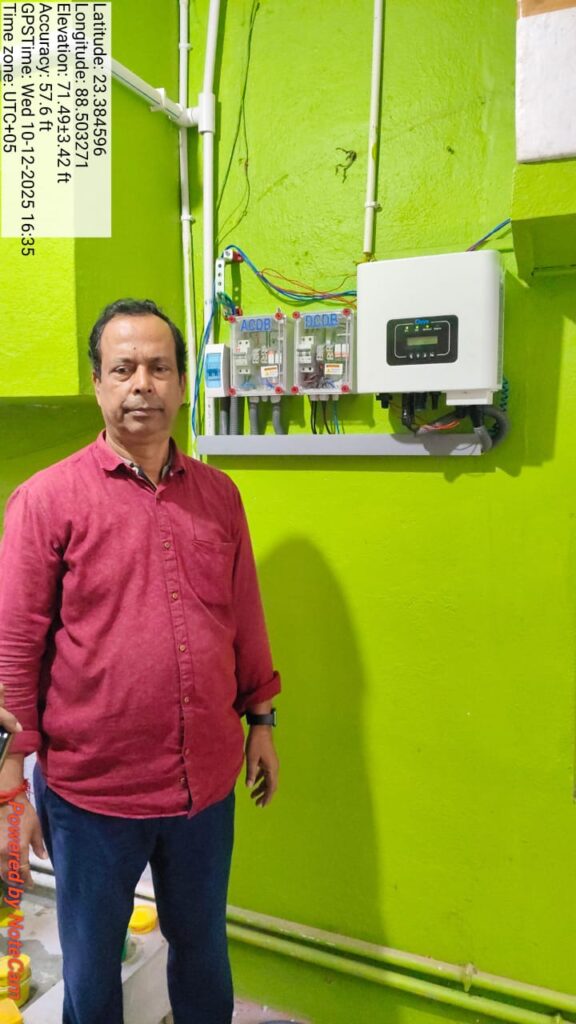
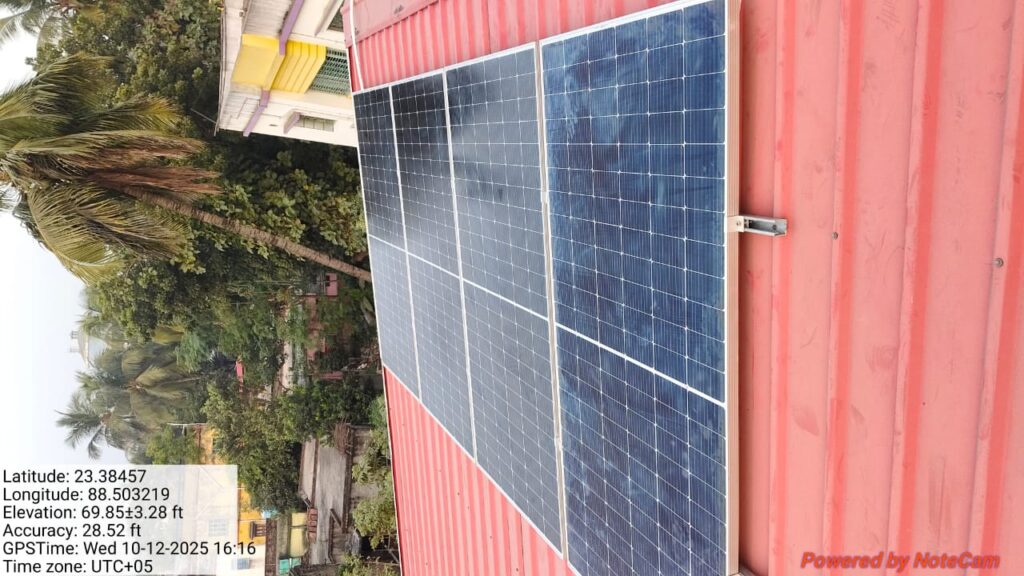
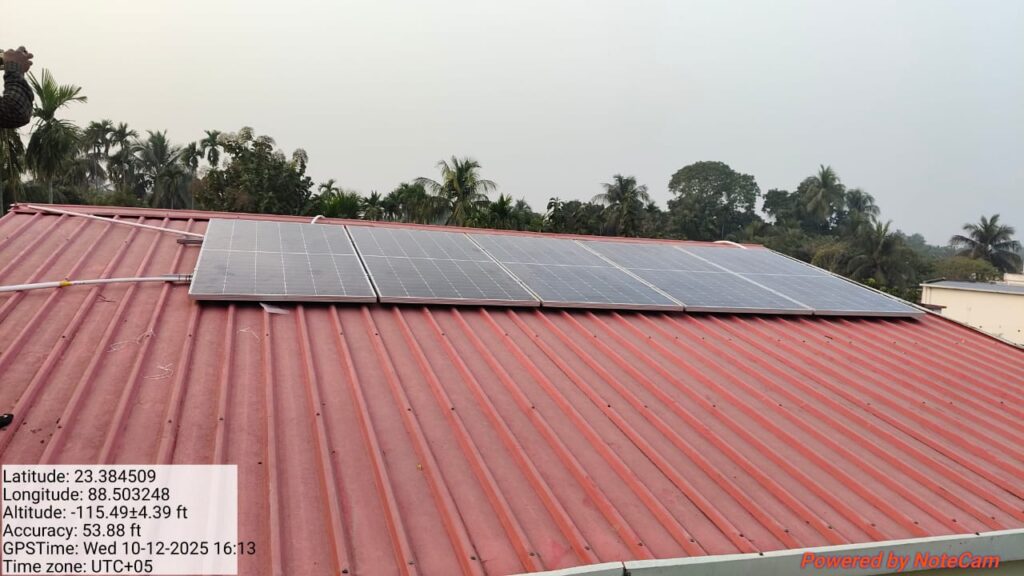
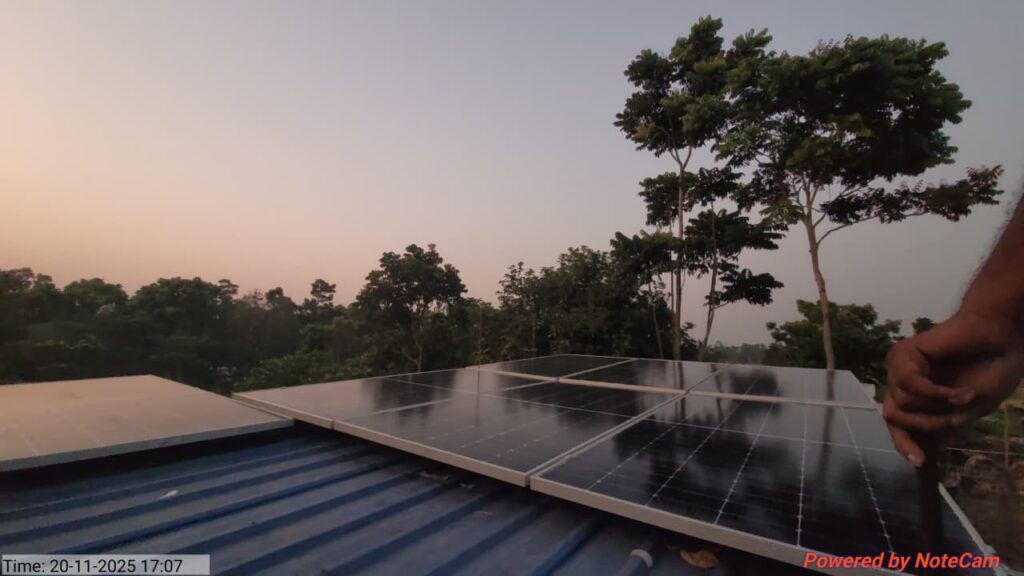
Client name: Sudipta Dhara
Location: Haldia
Project: 5kw ongrid DCR
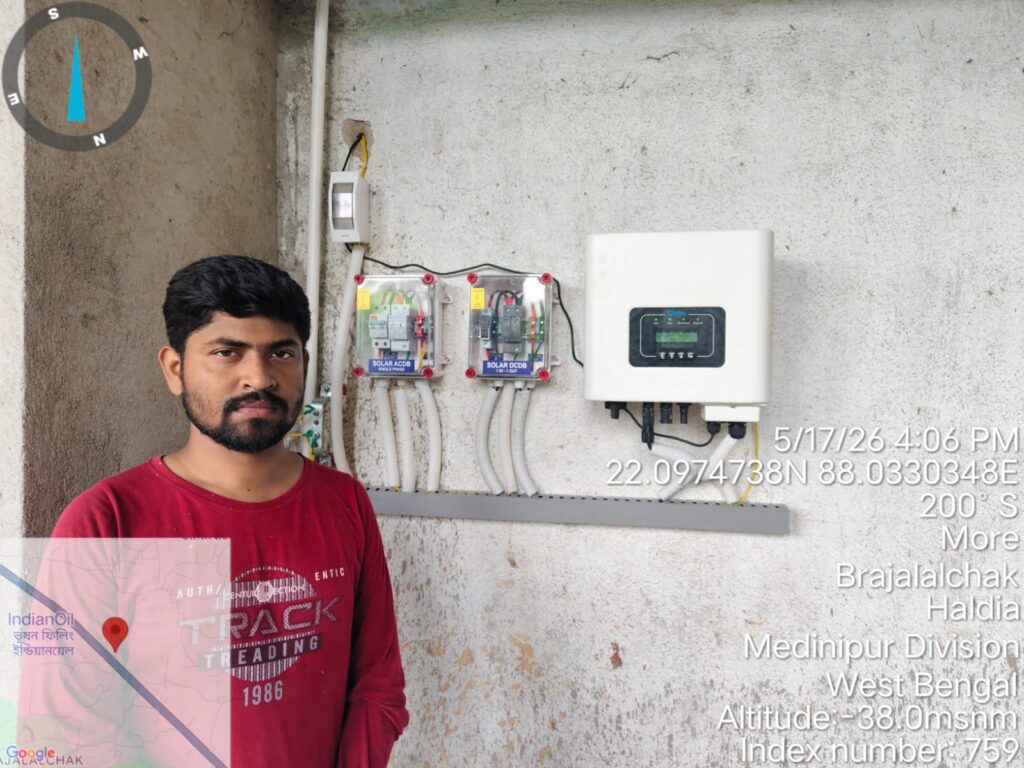
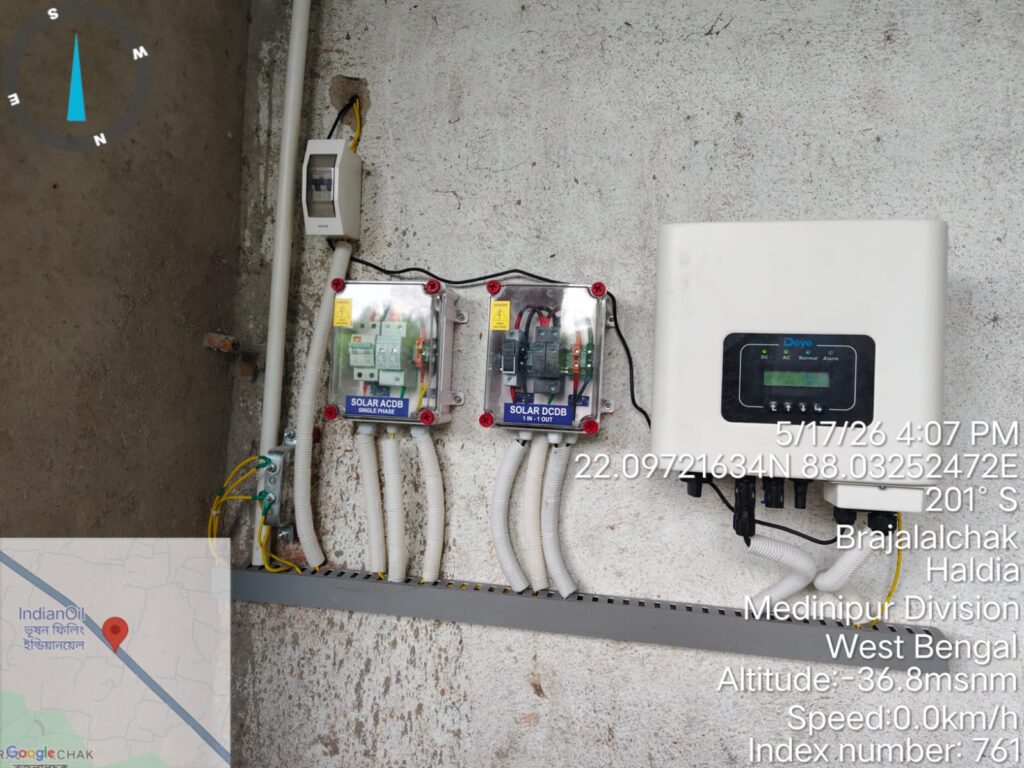

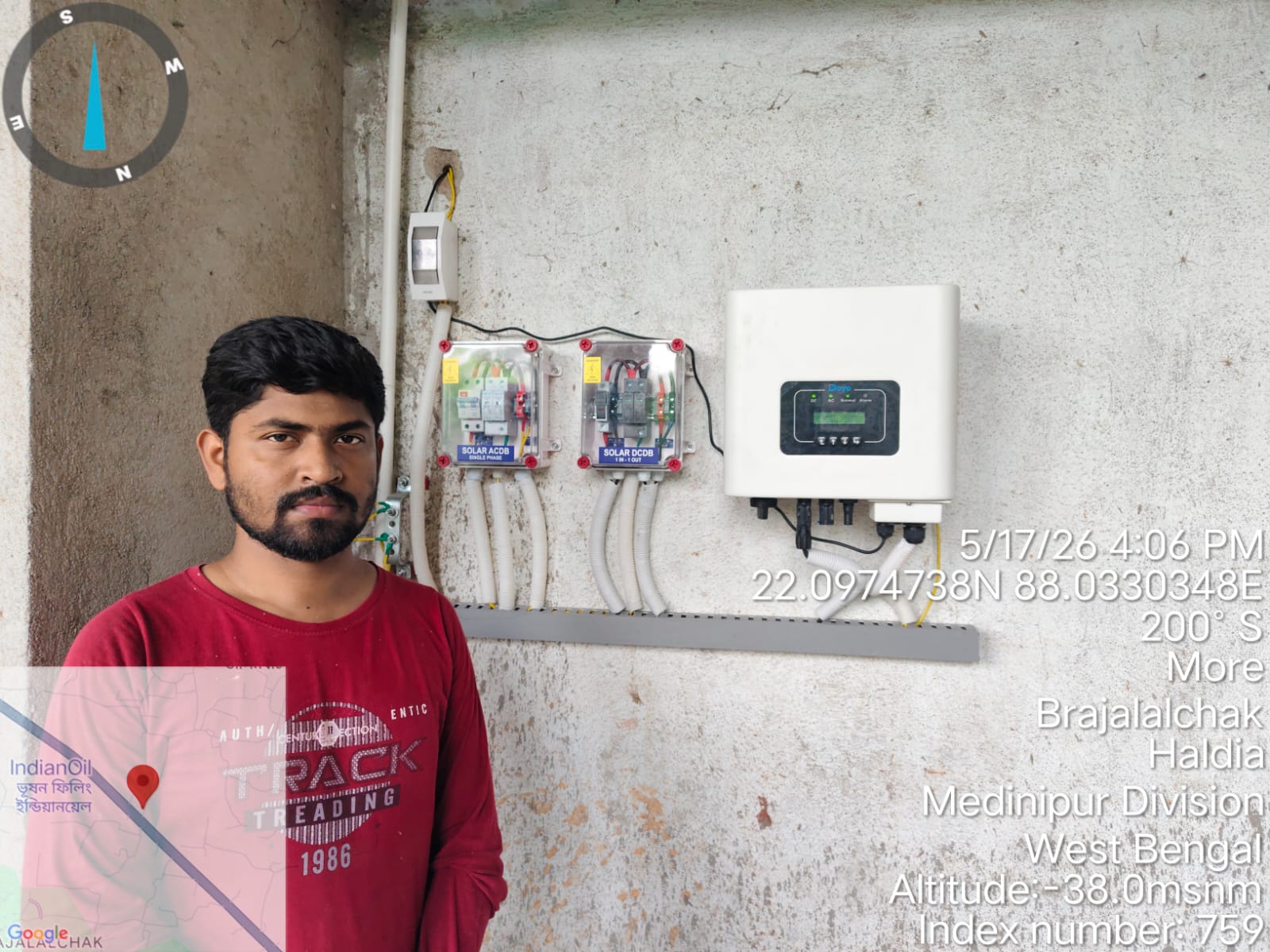
Client name: Sudipta Dhara
Location: Haldia
Project: 5kw ongrid DCR
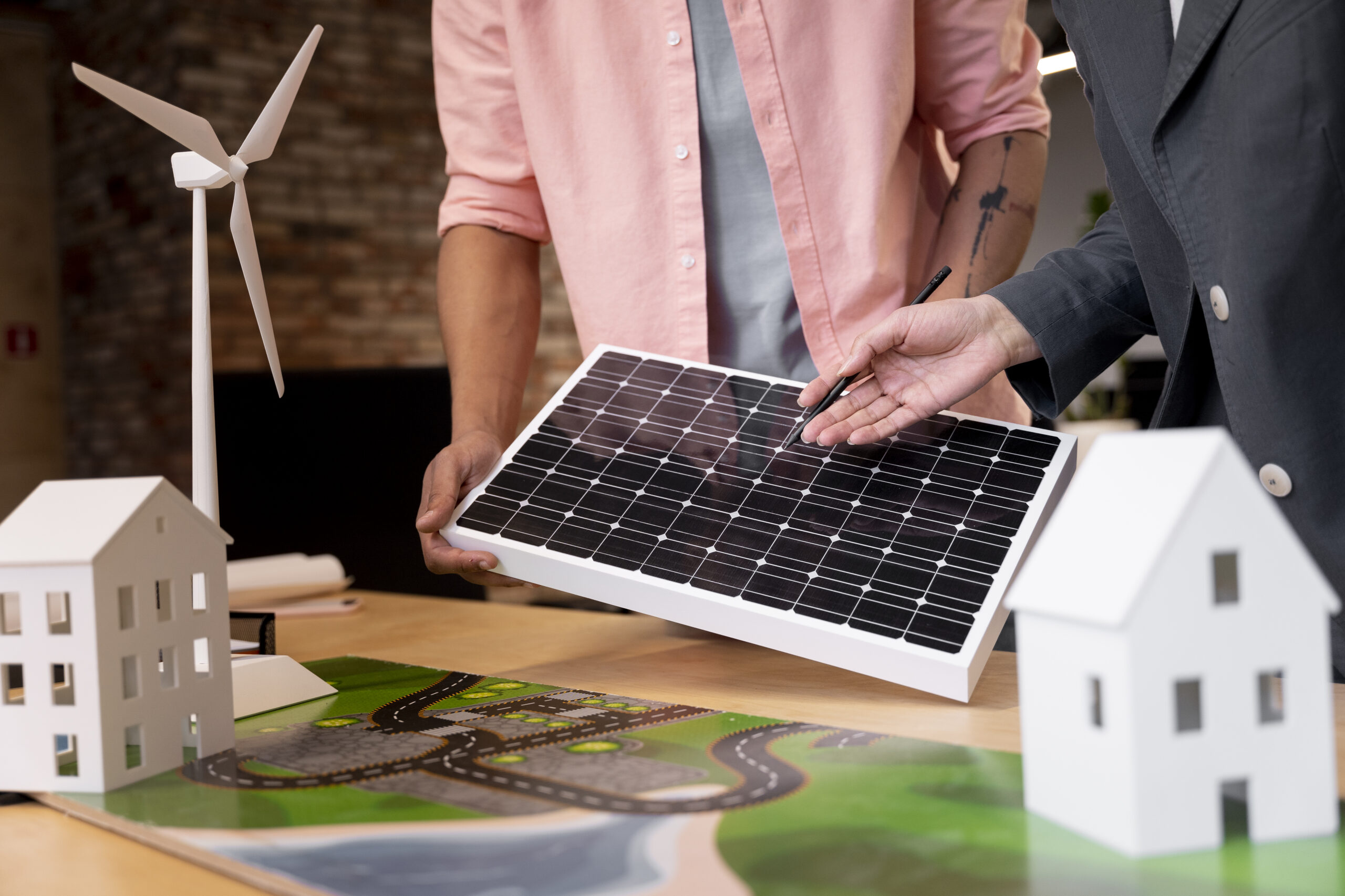
Why are homes and businesses switching to solar panel installation?
The city runs on energy all the time. But with electricity bills, power cuts and a growing awareness of our environmental impact, people are wondering: is there a better way to power my home or business?
The answer is yes. It’s called a Hybrid Solar System.
A hybrid solar system is like having the best of everything.
A traditional solar system feeds power back to the grid. It doesn’t work during power cuts. An off-grid system gives you independence. It needs a big battery bank and doesn’t work well on cloudy days. Click here (link) to know more about the hybrid solar system.
A hybrid solar system does both. It connects to the grid. Has battery storage.
Here’s how it works:
For a city like Kolkata with power cuts, hybrid solar is a game-changer.
Kolkata gets a lot of sunlight. With an average of 4.5–5.5 peak sun hours per day, the city is ideal for energy.
Compared to other cities, solar adoption in Kolkata has been slow. That’s changing fast. Hybrid solar systems are leading the way.
Whether you are in Salt Lake, New Town or the city centre, you can generate reliable solar power.
The question is no longer whether you can go solar. It’s why you haven’t yet?
If you stay in Kolkata, you know how frustrating power cuts are, especially during summer. Traditional inverters don’t work well. A hybrid solar system pairs high-efficiency batteries with smart energy management. Your system prioritises charging so your batteries are always full. When the grid fails, your system switches over instantly in under 20 milliseconds.
The average household in Kolkata spends ₹2,500–₹5,000 per month on electricity. A designed hybrid solar system can cut that bill by 60–90%. For businesses, the savings are even bigger. Many report getting a return on investment in 4–6 years.
3. Energy Independence
Every unit of power you generate today is a unit you won’t have to pay for later. With a system, you are locking in your energy costs. As battery technology improves, your system becomes more valuable.
Modern hybrid solar systems come with energy management systems that you can control with your smartphone. You can monitor energy generation, set priorities, track savings and get alerts for any issues.
The Indian government offers subsidies of up to ₹78,000 for solar installations. West Bengal’s state government also provides support.
The hybrid inverter is the brain of the system. It manages power sources. Solar panels, batteries and the grid. To choose the most efficient combination.
The right system size is crucial. Here’s a rough guide:
What you should look for:
Priya Sharma, Salt Lake Sector V: “We had frequent power cuts. Now our electricity bill is down, from ₹4,800 to ₹600 a month.”
Rajiv Singhania, Restaurant Owner, Park Street: “My solar system paid for itself in under five years. Now I’m running largely on solar power.”
• Make 7,000–8,000 units of clean electricity every year
• Reduce around 5–6 tonnes of CO₂ emissions each year
• Save as much as planting over 250 trees yearly
Kolkata has had bad air quality for a long time. Every rooftop that uses power is a small but important step towards cleaner air for this great city.
Before calling experts, do this check:
• Do you have at least 100–150 sq ft of rooftop space without shade for each kW of solar power you want?
• Is your rooftop facing south or west best for Kolkata’s sun?
• Is your rooftop stronger than 15 years old?
• Do you own the property, or does your society/landlord allow solar panels?
• Is your electricity bill over ₹2,000? (Solar power saves more if it’s higher)
If you said yes to most of these, you are a fit for hybrid solar.
A hybrid solar system isn’t a product. It’s about being independent from bills and power outages. It’s about investing in our city’s future.
The technology works. The economics make sense. The incentives are great. The right solar company in Kolkata can make it happen for you.
The sun shines over Kolkata every day. Isn’t it time you used it?
Ready to explore solar for your home or business?
Connect with a certified solar panel expert in Kolkata
📞+91 9136799865
And book a free site assessment and savings analysis.
1: What is a hybrid solar system, and how does it work?
A hybrid solar system combines solar panels, batteries, and the electricity grid. It allows you to use solar energy during the day, store excess power in batteries, and draw electricity from the grid when needed, ensuring an uninterrupted power supply.
2: How do I choose the best solar company in Kolkata for a hybrid solar system?
Look for a company with proven experience, quality solar products, certified installers, positive customer reviews, comprehensive warranties, and reliable after-sales support.
3: Is a hybrid solar system suitable for homes and businesses in Kolkata?
Yes. Hybrid solar systems are ideal for both residential and commercial properties in Kolkata, especially in areas that experience frequent power outages. They help reduce electricity bills while providing backup power during grid failures.
4: What factors affect the cost of a hybrid solar system in Kolkata?
The cost depends on several factors, including system capacity, battery type and size, solar panel quality, inverter specifications, installation requirements, and any additional monitoring or maintenance services included in the package.
Tired of your high electricity bill?
Here’s what we have for you
A solar water pump is a system that uses panels to pump water. It does not use electricity from the grid or diesel. Instead, it uses sunlight to pump water from places like rivers, ponds or reservoirs to where it’s needed.
Solar water pumps from the best solar company in Kolkata are being used in places from paddy fields in the Sundarbans to rooftop gardens in Salt Lake. They are changing the way people in West Bengal get water.
It is very simple. The solar panels absorb sunlight. Make electricity. A controller helps with electricity. Sends it to the pump motor. The motor then pushes water through pipes to storage tanks or directly to the field or tap.
Some systems have batteries that store energy for days or at night. Most of the time, the pump just uses the sunlight and stores water in tanks.
Agriculture uses a lot of water in India. For farmers in Nadia, North 24 Parganas and Purba Medinipur, diesel pumps are expensive and harmful for the environment. Solar pumps pay for themselves in 3-4 years. Then they are free to use them for 20 years.
The government gives subsidies to farmers for pumps. If you work with a solar company in Kolkata, you can get the maximum subsidy and a good system.
Rooftop solar systems with solar-powered booster pumps are becoming popular in housing projects. They save money on electricity bills. The best solar installer in Kolkata will assess your water needs. Design a system that is just right for you.
Compare quotes from companies, but do not choose based on price alone
The government gives subsidies for pumps in West Bengal. Homeowners and farmers can receive government subsidies. The best solar company in Kolkata will handle all your paperwork. Get you the maximum benefit.
Ready to use power for your water pump?
Connect with the best solar installer in Kolkata for a free assessment and subsidy assistance.
To get expert advice, contact +91 9136799865
1. How does a solar water pump work?
A solar water pump uses photovoltaic (PV) panels to convert sunlight into electricity, which powers a motor-driven pump. The pump then draws water from sources such as wells, rivers, ponds, or storage tanks and delivers it for irrigation, livestock, household, or commercial use.
2. What are the main benefits of using a solar water pump?
Solar water pumps offer several advantages, including lower operating costs, reduced dependence on grid electricity or diesel fuel, minimal maintenance requirements, environmentally friendly operation, and reliable water access in remote or off-grid locations.
3. Can a solar water pump work on cloudy days?
Yes, solar water pumps can operate on cloudy days, although their performance may be reduced due to lower sunlight intensity.
4. How do I choose the right solar water pump for my needs?
Choosing the right solar water pump depends on factors such as the water source depth, daily water requirements, pumping distance, elevation gain, and local sunlight conditions. Consulting a solar pump specialist can help determine the appropriate pump size, solar panel capacity, and system configuration for optimal performance.
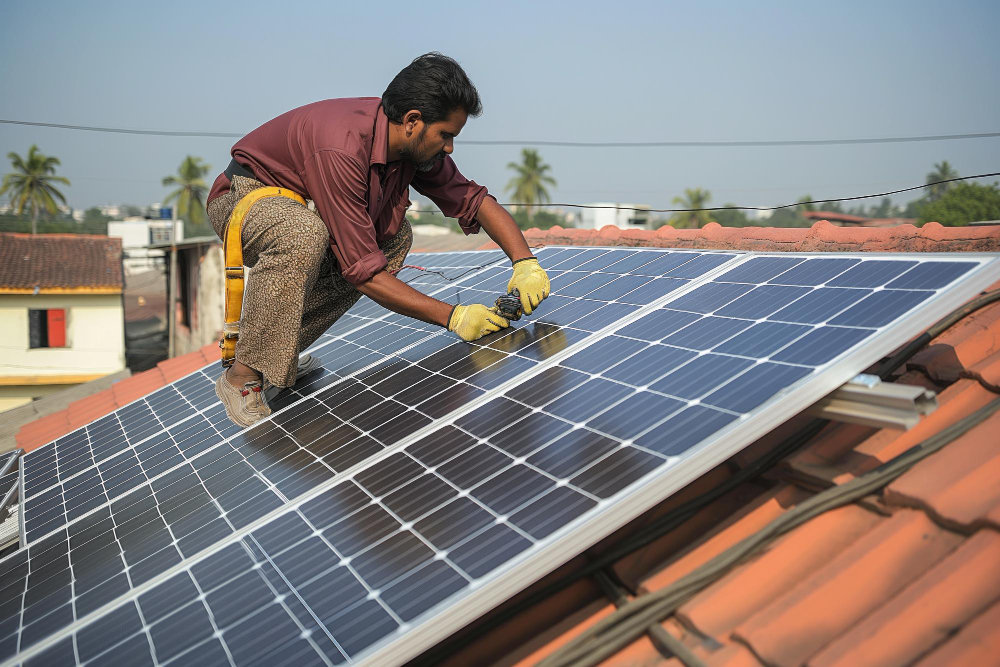
In today’s world, electricity costs keep going up, and people are getting more worried about the environment. That’s where solar lights come in. They are one of the most sustainable lighting choices out there.
You can use them for homes, offices, gardens, streets or commercial spaces. They are really popular because they save energy, are easy to maintain and are good for the environment.
If you are thinking of switching to solar energy, picking the right provider for solar panel installation in Kolkata can help you save money and make sure your system works efficiently. Working with the best solar company in Kolkata means you will get good products, expert installation and long-term reliability.
Solar lights are powered by sunlight. They use panels to absorb sunlight during the day and turn it into electricity, which is stored in rechargeable batteries. At night, the stored energy powers the lights automatically.
These systems are used for:
Solar lights run entirely on energy, so you don’t rely on traditional electricity. This helps households and businesses cut down on energy expenses.
Unlike lighting systems, solar lights don’t produce any carbon emissions. They help reduce your carbon footprint and contribute to the environment.
Solar lighting systems require maintenance. Once installed properly, they can function efficiently for years with battery checks and cleaning.
Modern solar lights are easy to install. Don’t require complex wiring. Professional providers offering solar panel installation in Kolkata can ensure an efficient setup process.
One of the advantages of solar lights is uninterrupted lighting during electricity outages. This makes them ideal for homes and businesses in areas with load shedding.
Kolkata gets plenty of sunlight throughout most of the year, making it highly suitable for energy solutions. As people become more aware of energy, many homeowners and businesses are now investing in solar systems to reduce electricity dependency and operating costs.
Choosing the best solar company in Kolkata can help you select the right solar lighting solutions based on your property size, energy needs and budget.
Types of Solar Lights
Factors to Consider Before Buying Solar Lights
Before investing in lighting systems, consider the following:
Working with experts in solar panel installation in Kolkata ensures you receive the guidance and long-term service support.
The Future of Solar Energy
With increasing awareness and advancements in renewable technology, solar lighting is no longer just an alternative. It’s becoming the future of sustainable living. Governments and businesses worldwide are encouraging the use of solutions to reduce energy consumption and promote clean energy.
If you are planning to upgrade your home or business with energy lighting, now is the perfect time to connect with the best solar company in Kolkata and make the switch to solar power.
Call at 📞+91 9136799865 to get expert advice on solar light installation
Or you can email at
info@magnificosolar.com / magnificosolar@gmail.com
1. How long do solar lights last?
Quality solar lights can last between 5 and 10 years, depending on battery quality and maintenance.
2. Do solar lights work during the day?
Yes, solar lights can still charge on days, although charging efficiency may be slightly reduced.
3. Are lights suitable for commercial spaces?
Absolutely. Solar lights are widely used in offices, parking lots, factories and commercial complexes for cost-effective lighting.
4. Why should I choose solar panel installation in Kolkata?
Professional installation ensures efficiency, proper positioning of panels, safety and long-term performance of the solar system.
Electricity bills in Kolkata have surged by over 20% in the last three years…
Have you taken any steps to reduce your bill?
If not yet, then read this.
Solar energy is no longer a futuristic concept; it’s today’s smartest financial decision. Click here to know more…
Commercial and Industrial Solar Solutions are installations on the rooftops of factories, warehouses, shopping centres, and schools. Because the cost of electricity is higher for businesses, the return on investment can be faster. Sometimes it can be more than four years. This makes it a smart investment in solar energy.
When you are looking for a solar company in Kolkata, you should look for:
Are you ready to start using solar energy?
You can get an assessment of your rooftop and a customised proposal for your home or business from the best solar company in Kolkata.
Using energy can save you a lot of money. For example, let’s say you have a home in South Kolkata and your electricity bill is ₹4,500 per month. You use 400 units of electricity per month. A 3kW solar system would cost about ₹1.5 lakh after the subsidy. It would generate 360 units of electricity per month. This would reduce your bill to under ₹800 per month. That is a savings of about ₹44,000 per year. The system would pay for itself in less than four years, and then you would have free electricity for the rest of its life.
Call at 📞+91 9136799865 and get expert advice on how to reduce your electricity cost
Or you can email info@magnificosolar.com / magnificosolar@gmail.com
Solar energy uses sunlight to make electricity, so you do not have to rely on the power grid much. This can make your electricity bills much lower, and in some cases, you might not have to pay bills at all.
Yes, solar energy systems can save you money in the long run. Many people who install panels on their homes or businesses get their money back through lower energy bills, tax breaks and less maintenance.
Solar panels still make electricity on cloudy days, but not as much as on sunny days. If you have a battery backup system, you can use the stored energy during power outages so you do not have to worry about losing electricity.
Switching to energy is good for the environment, helps reduce pollution, makes your property more valuable and helps you avoid rising electricity prices. Solar energy also helps you use less of the power grid, which can be very helpful.

Client name: Mr. Milan Chakraborty
Location: Diamond Harbour
Project: 3kw DCR


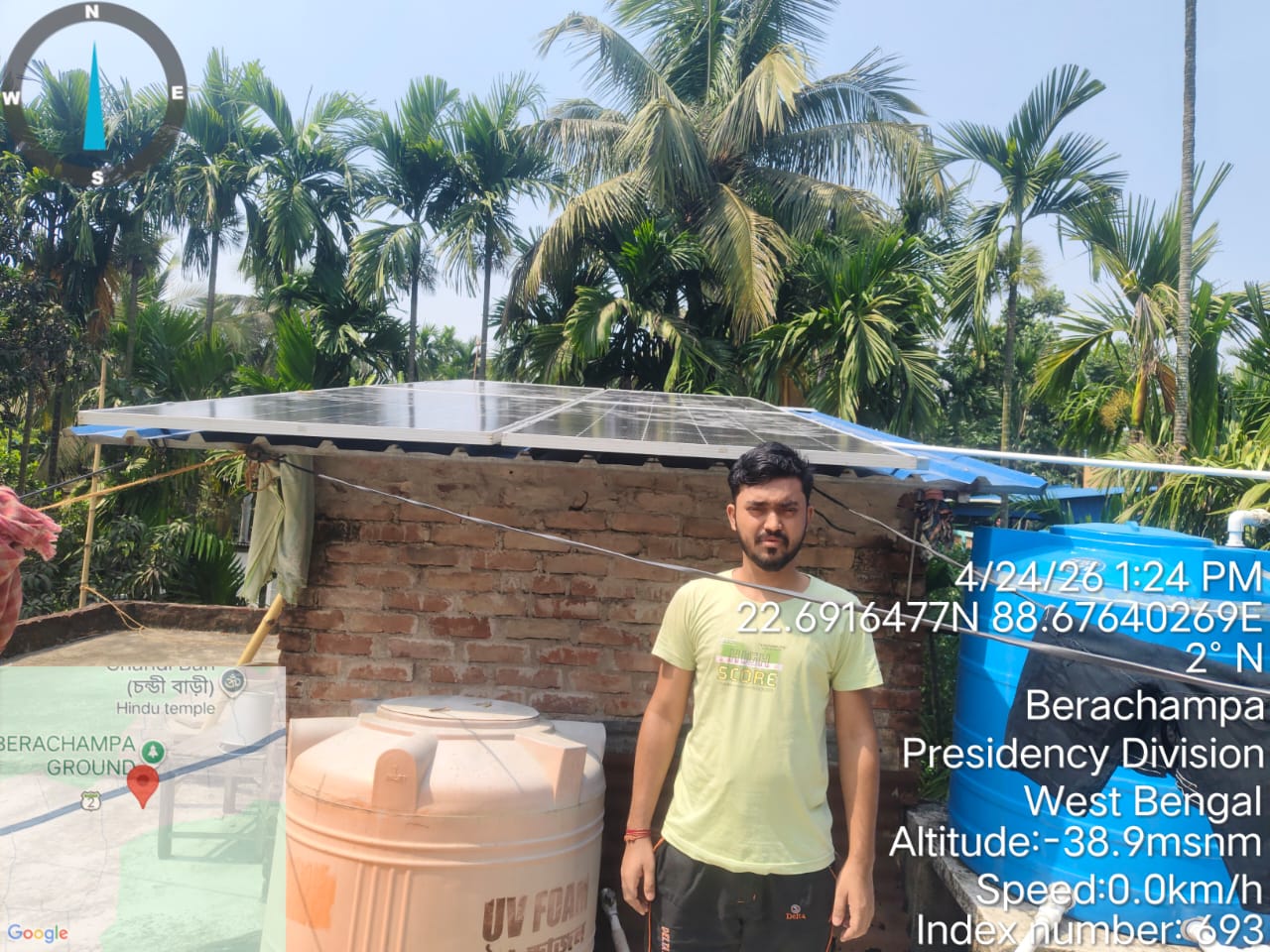
Name: Mr. Debasish Moulik
Location: Deganga, West Bengal
Project: 3kw non DCR
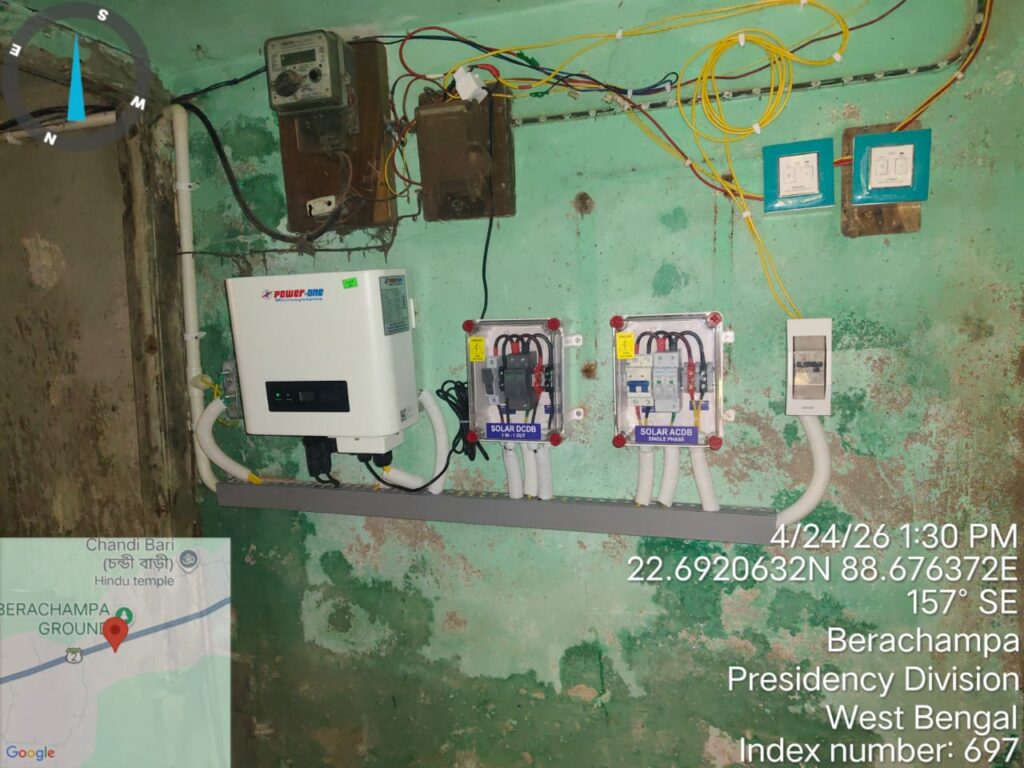
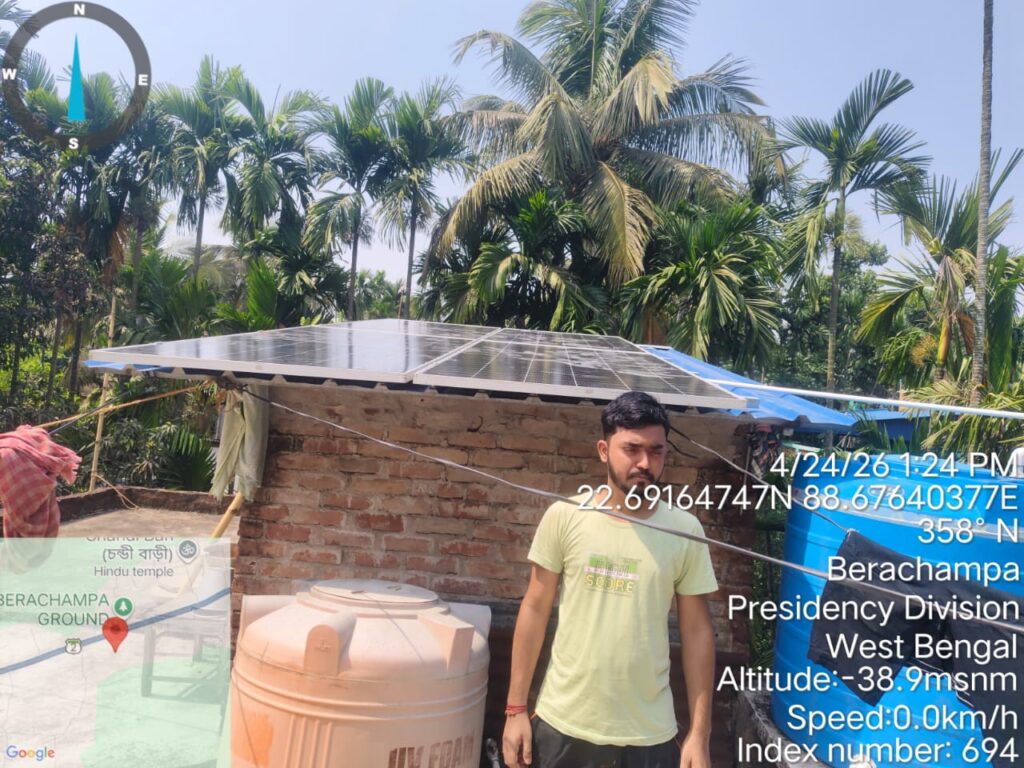
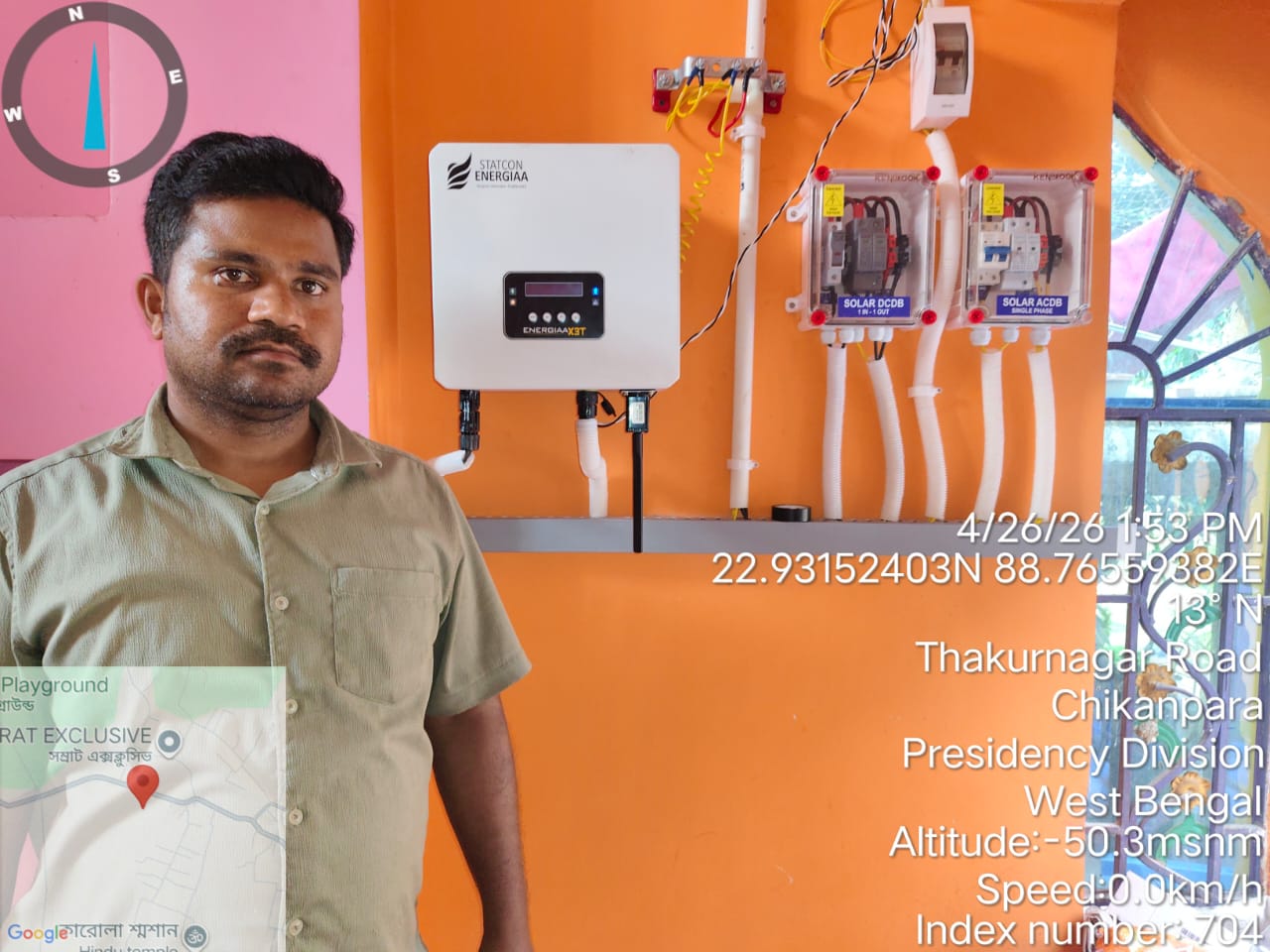
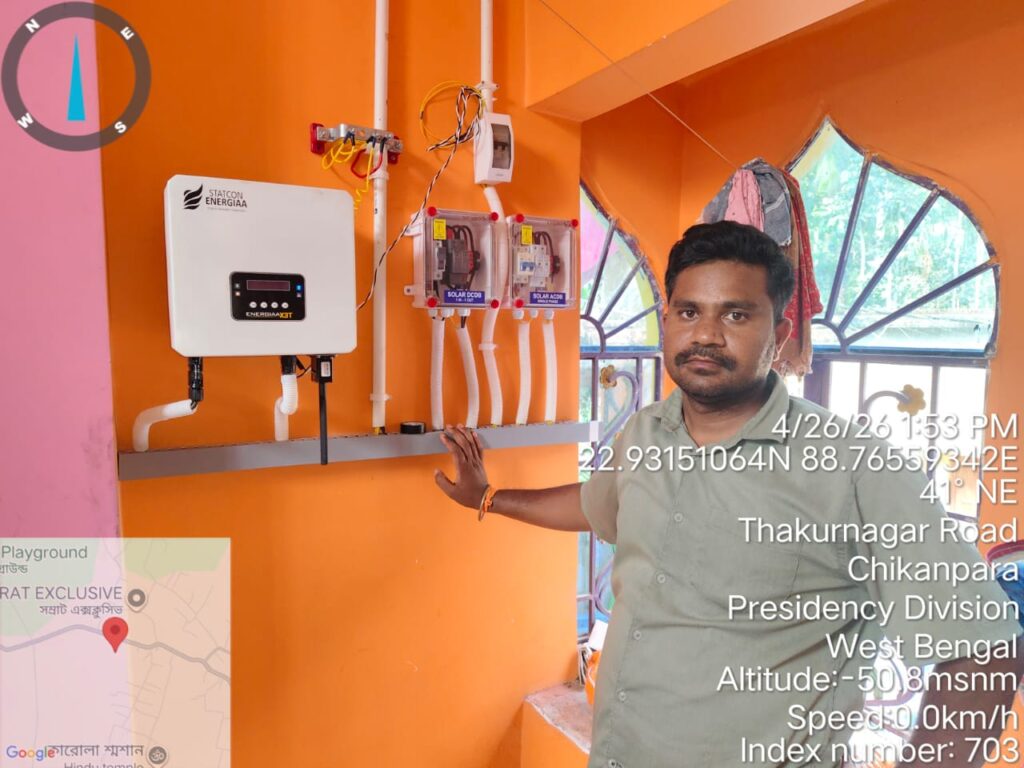
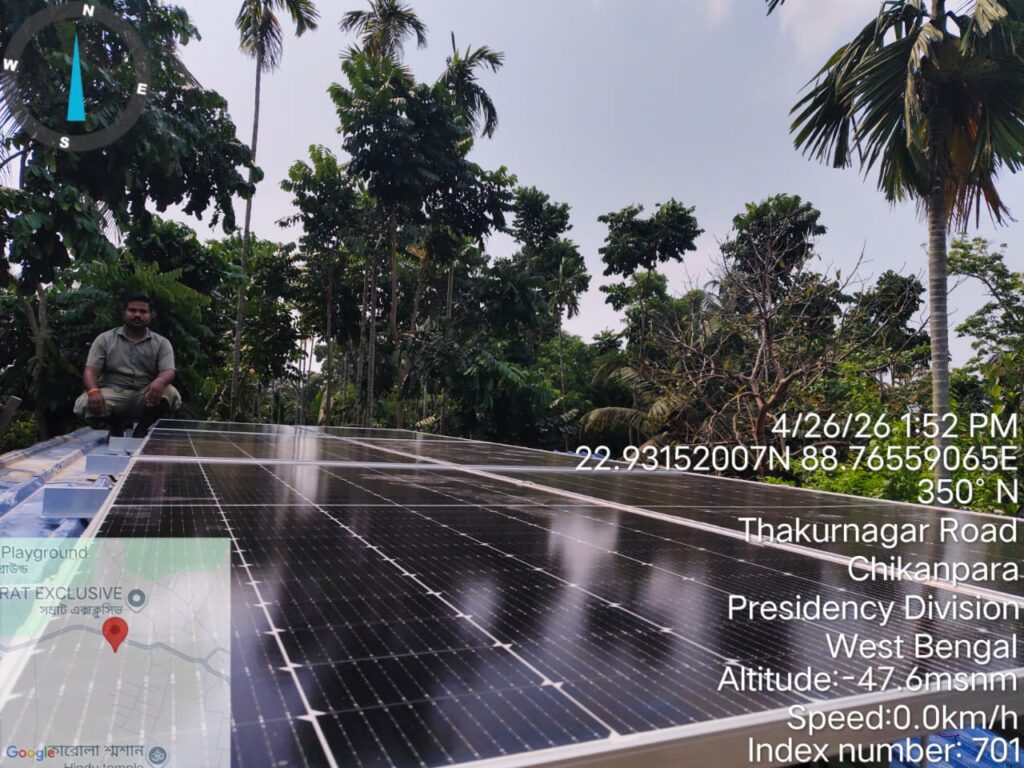
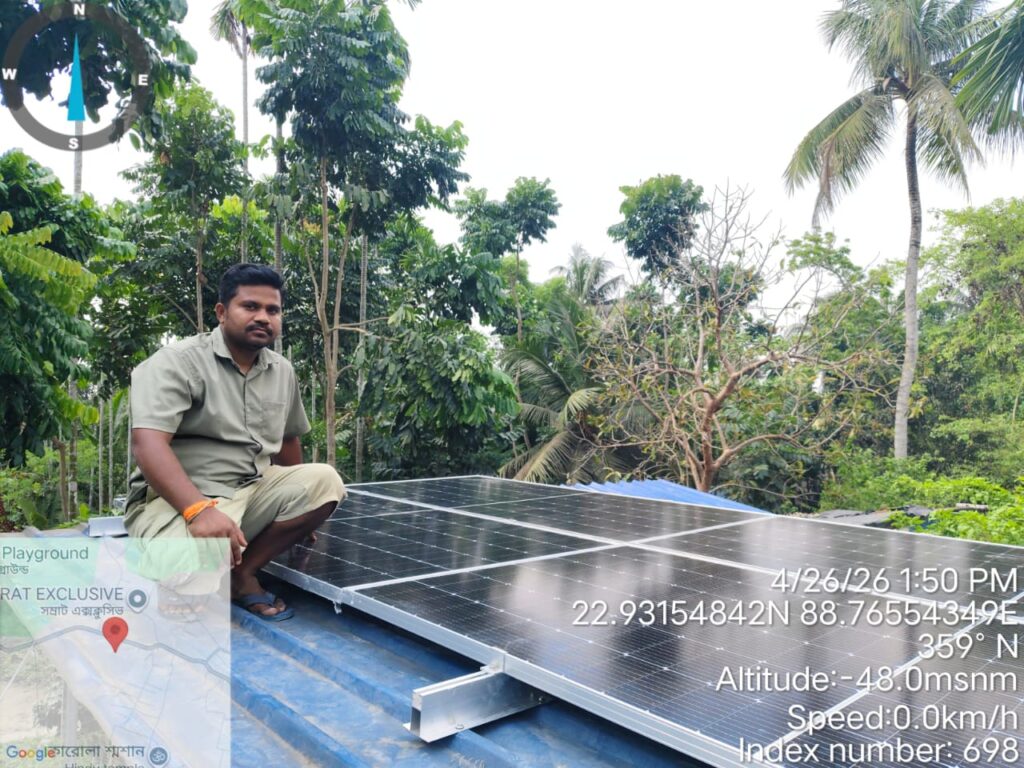
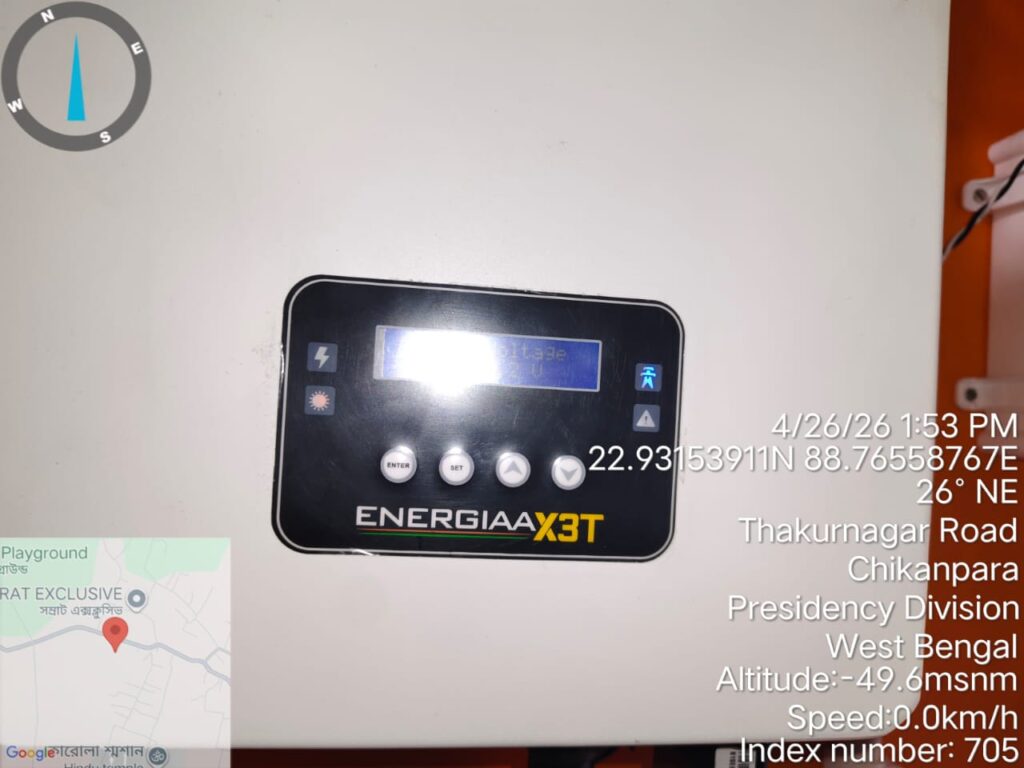
Client name: Mr. Samiran Roy
Location: Thakurnagar, Bongaon, West Bengal
Project: 3KW DCR
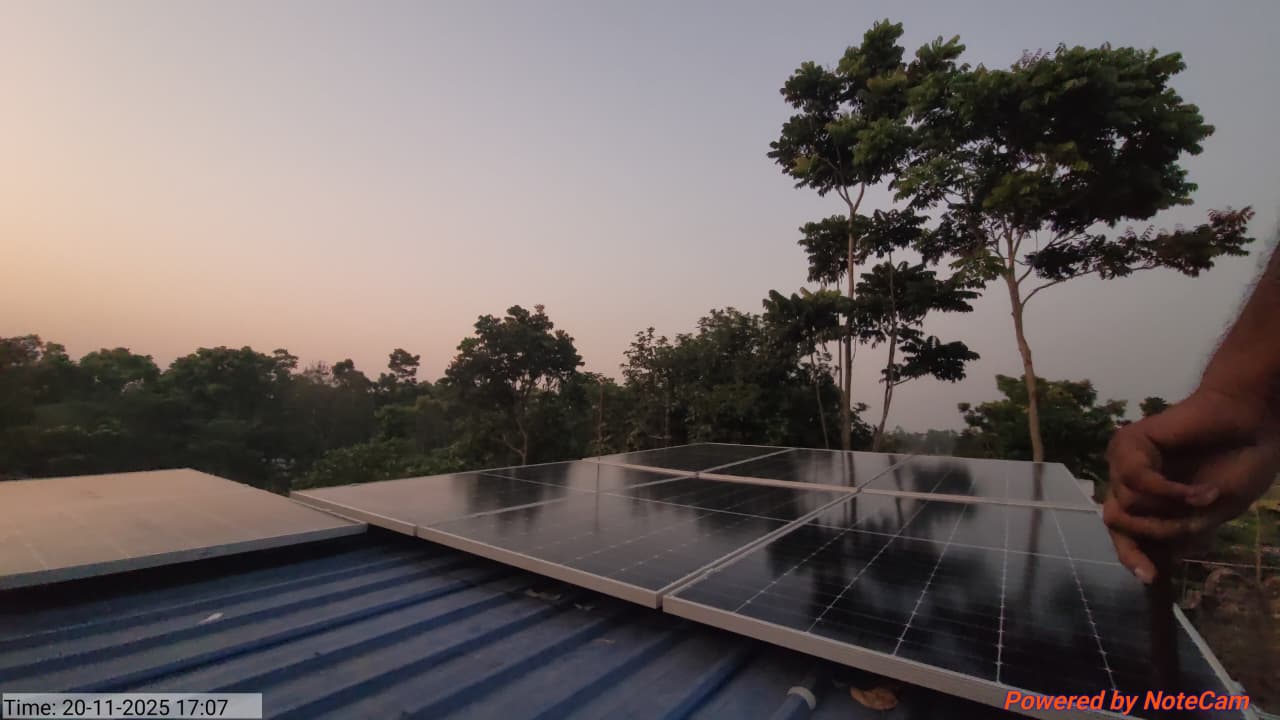
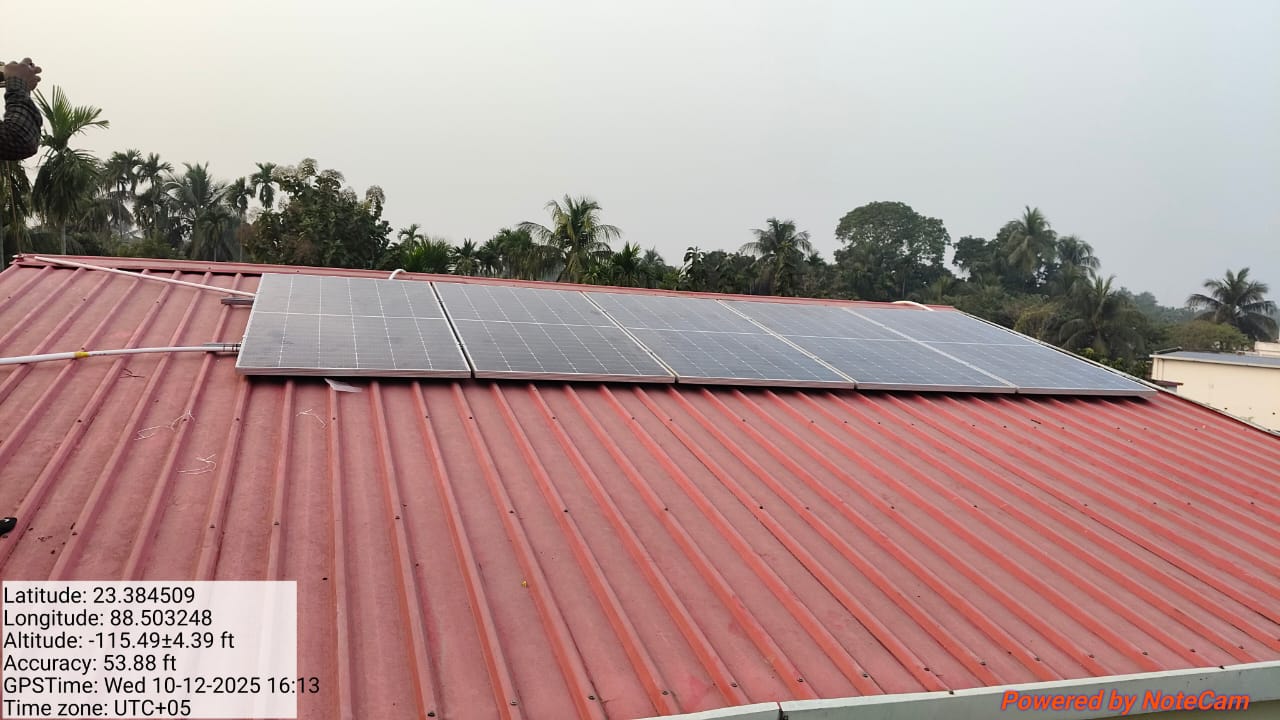
Location- Haringhata
Project- 5KW Ongrid
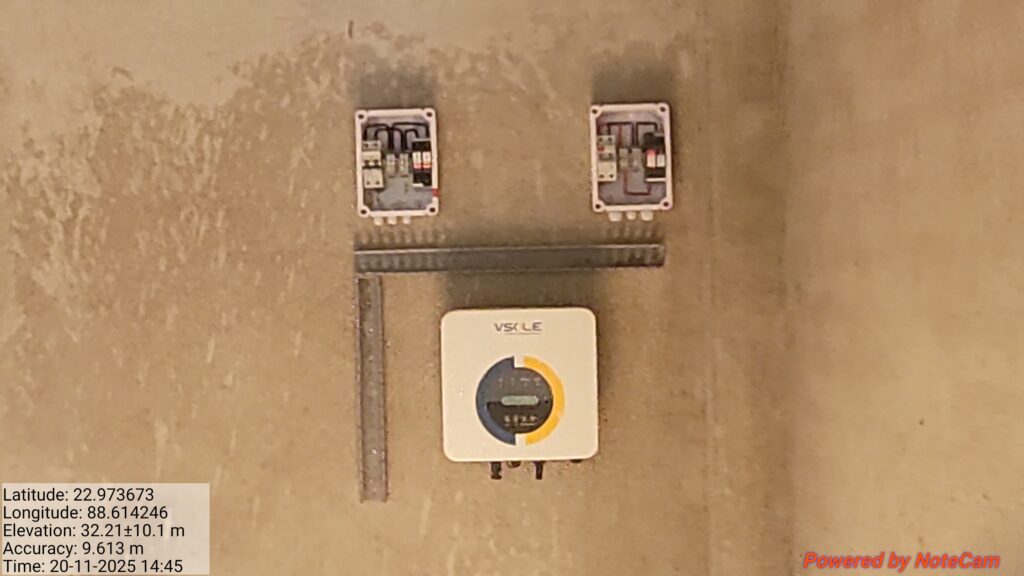
Location- Krishnanagar
Project- 5KW Ongrid