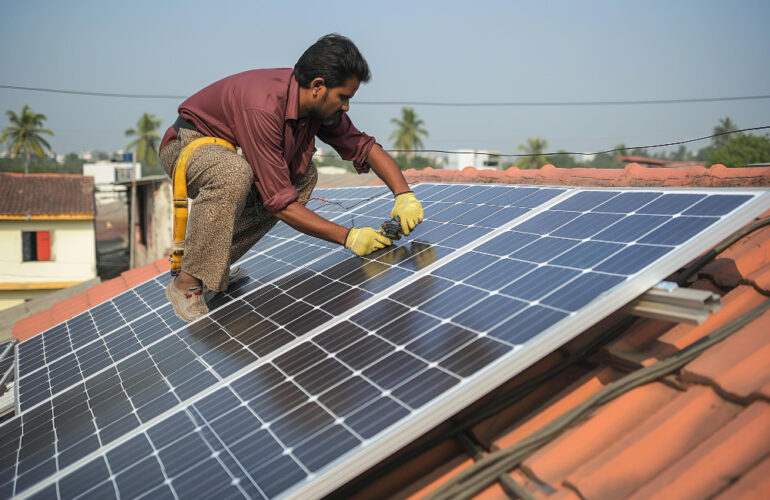

Picture your electricity bill this July. Now picture it 40% lower. That’s not a sales pitch; it’s the actual math for businesses that made the switch last year.
If you run a factory, office, warehouse, or retail chain and you have been sitting on the fence about going solar, 2026 is genuinely the year the numbers finally tilt in your favour. Equipment costs have dropped, financing has gotten easier, and, if you are based in West Bengal, the interest around commercial solar panel installation in Kolkata has picked up noticeably, thanks to rising grid tariffs and better local vendor support.
This guide walks you through everything: how the process actually works, what it costs, what to watch out for, and why Kolkata specifically is having a bit of a solar moment right now.
Table of Contents
Why Businesses Are Finally Taking Solar Seriously
For years, commercial solar felt like something only large factories with idle rooftop space bothered with. That’s changed.
A few things pushed it into the mainstream:
- Grid electricity keeps climbing. Commercial tariffs are consistently higher than residential ones, which means the payback period for businesses is often shorter than for homes.
- Panel prices have dropped substantially compared to five years ago, while efficiency has gone up.
- Depreciation benefits under Indian tax law let businesses write off a large chunk of the system cost in the very first year.
- ESG pressure — clients, investors, and even employees increasingly expect companies to show some climate accountability.
None of this is hype. It’s just businesses doing the math and realising rooftop solar pays for itself faster than most other capital investments.
Why Kolkata Is a Smart Place to Go Solar
Kolkata doesn’t get the solar spotlight the way Gujarat or Rajasthan does, but the fundamentals are quietly strong here.
- Decent solar irradiance- Kolkata gets roughly 4.5 to 5 peak sun hours a day on average, not the best in India, but more than enough to make commercial systems worthwhile.
- Rising commercial power tariffs in West Bengal have made solar an increasingly attractive hedge against unpredictable bills.
- Growing local ecosystem- more installers, better after-sales service, and easier access to financing than even three or four years ago.
- State and central subsidy overlap for certain categories of commercial and industrial consumers, which can meaningfully cut upfront costs.
If you are comparing vendors for commercial solar panel installation in Kolkata, you will now find a genuinely competitive market, which is good news for pricing and service quality.
How Commercial Solar Installation Actually Works
Most business owners assume it’s just “call a vendor, panels go up.” In reality, there’s a clear sequence, and understanding it helps you avoid getting oversold or underserved.
1. Site Assessment and Energy Audit
An installer studies your rooftop or ground space, shading patterns, structural load capacity, and, most importantly, your actual electricity consumption pattern. This determines system size, not the other way around.
2. System Design
Based on your load, the team designs a system: panel count, inverter capacity, wiring layout, and whether it’s on-grid, off-grid, or hybrid. For most commercial setups, on-grid systems make the most financial sense because they let you sell surplus power back through net metering.
3. Approvals and Net Metering Application
This is the part people underestimate. You will need clearances from the local electricity distribution company, structural approvals if required, and a net metering agreement. A good installer handles this paperwork for you.
4. Procurement and Installation
Panels, inverters, mounting structures, and cabling get installed, usually within a few days to a couple of weeks depending on system size.
5. Inspection and Commissioning
The utility inspects the setup, the net meter gets installed, and the system goes live.
6. Monitoring and Maintenance
Modern systems come with app-based monitoring so you can track generation in real time, flag underperformance early, and plan maintenance.
What Does It Actually Cost?
Costs vary by system size, panel type, and roof condition, but here’s a realistic range for 2026:
| System Size | Approx. Cost Range | Suitable For |
| 10–25 kW | ₹5.5–7 lakh | Small offices, retail stores |
| 25–100 kW | ₹13–27 lakh | Mid-sized factories, warehouses |
| 100 kW+ | Custom quote | Large industrial units |
Most commercial installations pay for themselves in 3 to 5 years, and panels typically carry 25-year performance warranties, meaning two decades of essentially free electricity after payback.
Choosing the Right Installer
This is where most of the actual risk lives, not in the technology, but in the vendor. Before signing anything, ask:
- Do they offer a genuine 25-year performance warranty, in writing?
- Do they handle net metering and DISCOM paperwork themselves, or leave it to you?
- What’s their response time for maintenance issues?
- Are their panels and inverters from tier-1, bankable manufacturers?
Common Mistakes Businesses Make
- Oversizing the system to “future-proof” without matching actual load data- this wastes capital.
- Ignoring roof condition. Installing on a roof that needs repair in two years means paying to dismantle and reinstall.
- Skipping the energy audit and just going with a standard package size.
- Not checking net metering feasibility before committing -some DISCOM zones have capacity limits.
Is 2026 the Right Time?
If your business has predictable daytime power consumption- factories, cold storage, offices, retail- the answer is almost always yes. Costs are down, subsidies are still active in several categories, and payback periods are shorter than they have ever been. Waiting another year rarely improves the math; it just delays the savings.
For businesses specifically weighing commercial solar panel installation in Kolkata, the combination of decent sunlight, rising tariffs, and a maturing local vendor market makes this one of the more sensible capital decisions you can make this year.
Click here to learn more and get expert guidance.
Frequently Asked Questions
- How much rooftop space do I need for commercial solar installation?
As a rough rule, 1 kW of solar capacity needs about 80–100 square feet of shadow-free rooftop area. So, a 25 kW system would need roughly 2,000–2,500 square feet.
- Can my business sell excess solar power back to the grid?
Yes, through net metering. Any surplus power your system generates beyond what you consume gets exported to the grid, and you are credited for it, effectively lowering your net electricity bill further.
- How long does commercial solar installation take from start to finish?
For most mid-sized commercial systems, expect 4 to 8 weeks total, including site assessment, approvals, installation, and commissioning. Larger industrial systems can take longer due to structural and approval complexity.
- What maintenance does a commercial solar system require?
Very little, mainly periodic panel cleaning (especially important in dusty or humid climates like Kolkata) and routine inverter checks. Most installers offer annual maintenance contracts that cover both.